The Day Shift and the Night Shift: Bristlenose vs Corydoras, the Two Catfish Every Tank Needs
In This Guide
- 1. The Clean-Up Crew Myth
- 2. Meet the Catfish
- 3. Space and the Starter Kit
- 4. The Filter
- 5. The Heater
- 6. The Lid
- 7. Setting the Scene
- 8. An Invisible Science: the Nitrogen Cycle
- 9. How Many, and Who With
- 10. Feeding
- 11. The Weekly Rhythm
- 12. Why You Want Both
- 13. Quick Reference: Bristlenose and Corys at a Glance
- 14. Myths: Fact vs. Fiction
It's mid-morning and the lights are on. Along the bottom of the tank, a little gang of corydoras is hard at work, noses down in the sand, whiskers twitching, sifting for crumbs. Every so often one darts to the surface for a gulp of air and wiggles back down, a little too pleased with itself.
Ten hours later the lights go off and the corys settle down. That's when a second catfish slides out of its cave. The bristlenose has been resting all day. Now it works the night shift, rasping algae off the glass and grazing the driftwood until morning.
These two catfish share a tank beautifully because they share almost nothing else: different hours, different food, different jobs. Put them together and you'll have a bottom level that's busy around the clock.
The Clean-Up Crew Myth
Both fish are often sold as "cleaners", and that's where the trouble starts. Corys don't clean your tank, and neither does a bristlenose. Corys eat the food that sinks past the other fish, and a bristlenose grazes algae and wood. Both still need their own proper meals, and neither replaces a water change. Bought as cleaners, both often end up quietly starving.
Meet the Catfish
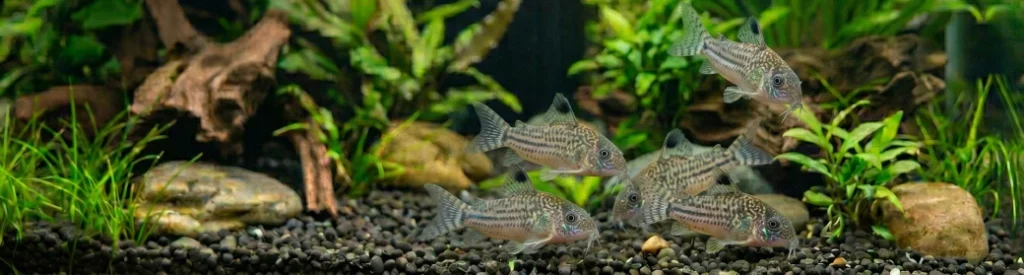
The Bristlenose Catfish (Ancistrus), often called the bristlenose pleco, is the night shift. A South American armoured catfish, it reaches 10–15cm and can live 10 years or more. Mature males grow the bushy bristles on their snouts that give the fish its name. Unlike the common pleco, which can top 30cm, the bristlenose stays a sensible size for a home tank. You'll find common, albino and long-fin varieties.
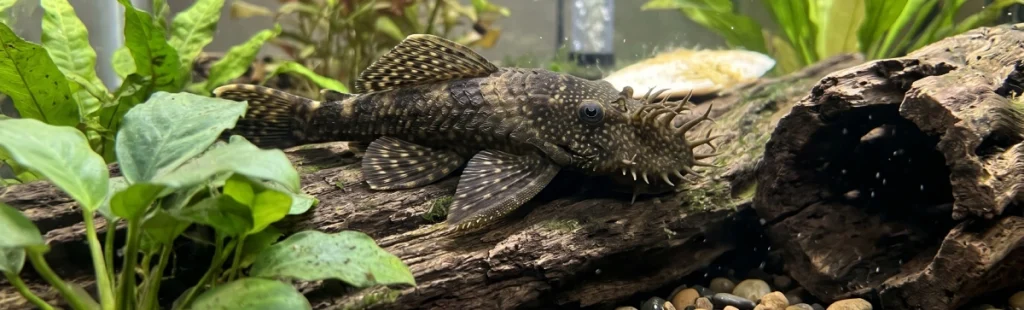
Corydoras are the day shift. These small, armoured South American catfish come in dozens of species, from the bronze and peppered corys to the panda and the tiny pygmy cory. Most grow to 4–7cm and live 5–10 years. They're sociable, playful and almost always on the move during the day.
| Bristlenose | Corydoras | |
|---|---|---|
| Adult size | 10–15cm | 4–7cm, species dependent |
| Active | Night and dusk | Day |
| Diet | Algae, vegetables, wood | Sinking pellets, small frozen foods |
| Social style | Happy alone or in a pair | Groups of 6+ of one species |
| Needs | Driftwood and caves | Soft sand |
Space and the Starter Kit
Both catfish live on the bottom, so floor space matters more than height. Our experts recommend at least 80–100 litres for a bristlenose and a group of corys together. A school of pygmy corys can manage in 40 litres, but bronze and peppered corys need 60 litres or more, as they're surprisingly active once they settle.
Buy your gear at least two weeks before your fish.
The Filter
Bristlenose produce a lot of waste for their size, and corys are sensitive to dirty water, so good biological filtration matters. A hang-on-back or canister filter suits most community tanks. Keep the intake covered with a sponge to protect small corys.
The Heater
Most corys and bristlenose are comfortable at 22–26°C. Bronze and peppered corys tolerate the cooler end, which helps in southern homes, but a heater with a thermostat keeps things steady through winter.
The Lid
Corys dart to the surface to gulp air, which is completely normal. A lid stops an enthusiastic dash from ending on the floor.
Setting the Scene
The two fish want different things from the bottom of the tank, and a good setup gives them both.
For corys: soft sand. Corys dig with their noses and feel for food with their whisker-like barbels, and rough or sharp gravel wears those barbels down. Fine, smooth sand lets them forage the way they would in a South American stream.
For the bristlenose: driftwood and caves. Bristlenose rasp at wood, and the fibre is part of a healthy diet, so at least one piece of real driftwood belongs in every bristlenose tank. A cave gives it somewhere to spend the day, and it's where a male will guard eggs if you end up with a breeding pair. Bristlenose breed readily, and plenty of keepers get a surprise batch of babies.
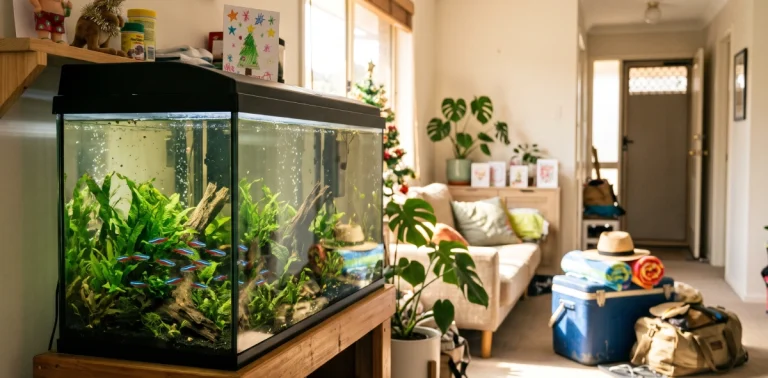
Plants, soft lighting and a few shaded areas suit both fish. Java Fern and Anubias tied onto the driftwood look great and survive a bristlenose's attention.
An Invisible Science: the Nitrogen Cycle
Bottom dwellers live right where waste settles, so they feel water problems first. Fish produce toxic ammonia; bacteria turn it into nitrite, still toxic, then into nitrate, which water changes remove. Growing those bacteria is called cycling, and the tank needs it before any fish arrive.
The Pro Move: Add a pinch of fish food to the empty, running tank every day for two to three weeks. When ammonia and nitrite both read 0ppm, it's ready. Corys especially appreciate a tank that's been running a little longer. Our guide on How to Cycle a Fish Tank the Right Way covers the full method.
How Many, and Who With
Corys are social fish that need their own kind. Keep at least six of the same species. They will mix loosely with other cory species, but each species shoals most comfortably with its own. A lone cory, or a pair, tends to hide and fade.
One bristlenose is plenty for most tanks. Two males will squabble over the best cave, so a male and female pair works better than two males, and only in a tank big enough for a cave each.
The two get on well. A bristlenose may shoo a cory off a piece of wood now and then, but with enough caves and space there's no real conflict.
Both suit peaceful community tanks. Good neighbours include tetras, rasboras, danios and dwarf gouramis. Avoid large or aggressive fish that compete for the bottom, like red tail sharks, and any fish big enough to swallow a small cory.
Feeding
This is where most catfish go wrong. Because they're on the bottom, people assume they'll get enough from leftovers. Usually they don't.
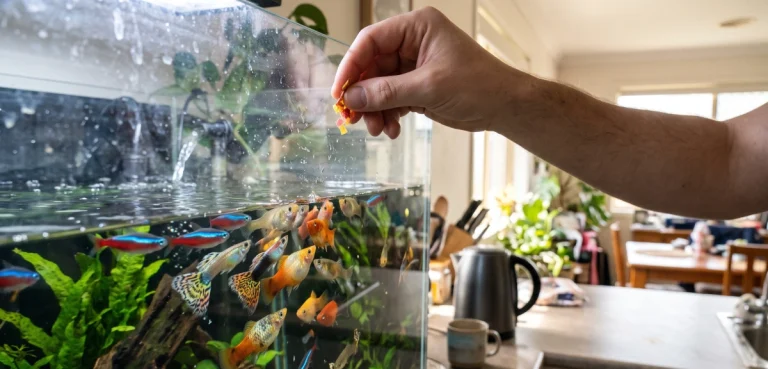
Corys need sinking food that reaches them before the mid-water fish take it all. Give them sinking pellets or wafers daily, with frozen bloodworm or brine shrimp a couple of times a week.
Bristlenose are mostly vegetarian. Feed an algae wafer in the evening, just before lights out, and add blanched zucchini, cucumber or spinach two or three times a week. Clip it to the glass or weigh it down, and take out what's left the next morning. A small meaty treat once a week keeps them in good condition.
You can find all the options within our fish food range for Catfish.
Feed only what gets eaten, and fast the tank one day a week.
The Weekly Rhythm
Weekly: Change 20–25% of the water. Run a gravel vacuum lightly over the sand, where uneaten food collects around the corys. Treat new water with conditioner to remove chlorine and chloramine.
Monthly: Rinse filter media in old tank water, never under the tap.
Always: Check the corys' barbels. Short, worn or red whiskers usually point to rough substrate or dirty sand, and are an early sign that something needs fixing.
Why You Want Both
Most community tanks have a busy middle and an empty bottom. Corys fill the bottom during the day with constant, cheerful movement, and they tidy up food the other fish miss. The bristlenose takes over at night, keeping algae on the glass and wood under control. Together they make use of a part of the tank that would otherwise sit still.
That's why our experts so often recommend them as a pair for a first community tank, alongside a school of tetras or rasboras.
Quick Reference: Bristlenose and Corys at a Glance
| Feature | Requirement | Why |
|---|---|---|
| Tank size | 80–100 litres for both together | Floor space for two bottom dwellers |
| Temperature | 22–26°C | Comfortable for most species |
| Substrate | Soft, fine sand | Protects cory barbels |
| Décor | Driftwood and caves | Diet and shelter for the bristlenose |
| Group size | Corys 6+; one bristlenose | Corys are social, bristlenose territorial |
| Diet | Sinking pellets for corys; algae wafers and vegetables for bristlenose | Leftovers aren't enough |
Myths: Fact vs. Fiction
Myth: "Catfish will keep my tank clean." Reality: They eat leftovers and algae, but they add waste too. Water changes and filter care still do the cleaning.
Myth: "Plecos all grow huge." Reality: The common pleco can top 30cm, but the bristlenose stays around 10–15cm, which is why it's the pleco of choice for home tanks.
Myth: "My cory is in trouble because it keeps darting to the surface." Reality: Corys can gulp air from the surface, and an occasional dash is normal. Constant gasping is different, and a sign to test your water.
Come back to that tank in the morning and the corys are already at work, whiskers in the sand, while the bristlenose dozes in its cave after a night on the glass. Two simple fish, two shifts, and a tank that never really sleeps.