Greens on the Menu: Feeding Herbivores and Grazing Fish
In This Guide
- 1. A Rock Face in Lake Malawi
- 2. The Colour Trap
- 3. Meet the Grazers
- 4. Lake Malawi: Mbuna
- 5. Lake Tanganyika: Tropheus
- 6. Central America: Mollies
- 7. South America: Bristlenose Catfish
- 8. A Gut Built for Greens
- 9. The Grazer's Menu
- 10. The staple
- 11. The salad bar
- 12. The occasional treat
- 13. Little and Often
- 14. Quick Reference
- 15. Myths: Fact vs. Fiction
- 16. Back to the Rocks
A Rock Face in Lake Malawi
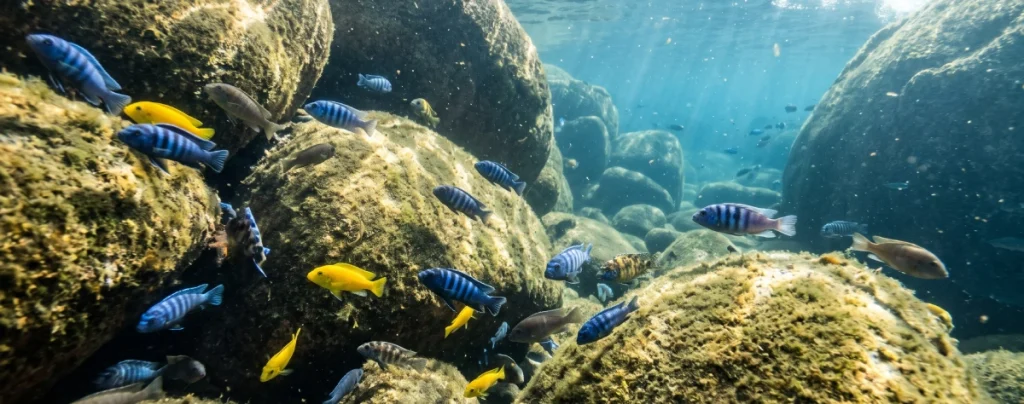
Imagine floating face down over the rocky shoreline of Lake Malawi, in East Africa. The water is warm and so clear you can see every boulder below. Each rock is coated in a soft green-brown fuzz, and over it swarm hundreds of small, brilliantly coloured cichlids, yellow, electric blue, striped and spotted, each one nipping and scraping at the rocks without a pause.
Those fish are mbuna, and the fuzz is their dinner: a living mat of algae with tiny insects and crustaceans tangled through it. They graze it all day long, a mouthful at a time.
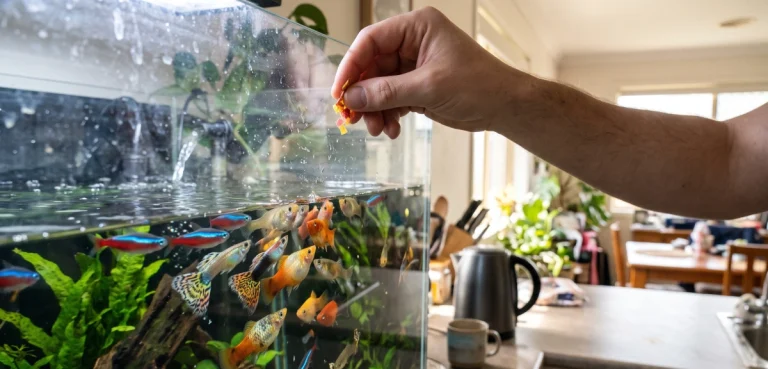
Now come home to your living room, where a group of those same fish is waiting at the front glass for a pinch of food. What goes into that pinch decides whether they stay bright and busy for years or fall ill within months. Let's work out what a grazer really needs, from the lake to your tank.
In This Guide
- The Colour Trap
- Meet the Grazers
- A Gut Built for Greens
- The Grazer's Menu
- Little and Often
- Quick Reference
- Myths: Fact vs. Fiction
The Colour Trap
It's a common story. Someone sets up a stunning Malawi tank, wants the colours to really pop, and starts feeding rich, meaty foods: bloodworm most days, a high-protein pellet, maybe some prawn. For a while the fish look fantastic.
Then one fish stops eating. Its belly swells, it hangs near the back of the tank, and within a few days it's gone. Sometimes another follows.
The food that seemed like a treat was the problem. Grazing fish are built for a diet that's mostly plant matter, and a steady supply of rich protein can overwhelm their digestion. In grazers, the best colour comes from eating the right things. Spirulina and other algae are packed with natural pigments, and mbuna fed on them often colour up beautifully.
Meet the Grazers
Very few aquarium fish are true herbivores that eat nothing but plants. Plenty, though, lean so heavily towards greens that they need to be fed like plant-eaters. Let's take a quick trip around the world to meet the ones you're most likely to keep, starting right where we began.
Lake Malawi: Mbuna
The rock-dwelling cichlids of Lake Malawi, including favourites like the electric yellow and the demasoni. They're bold, busy and territorial, and in the wild they spend their days scraping algae off rocks. You'll find them in our Lake Malawi cichlids range.
Here's some honest advice for mixed Malawi tanks: not every Malawi cichlid is a grazer. Peacocks and many of the larger haps are sand-sifters and hunters that need more protein than mbuna. If you keep both together, feed a quality spirulina-based staple to everyone and offer meatier foods sparingly, so the mbuna aren't eating a diet built for their neighbours.
Lake Tanganyika: Tropheus
A short hop north-west brings you to Lake Tanganyika, home of the Tropheus. They're specialist algae grazers with sensitive digestion, and they're the fish most closely linked with bloat. They suit experienced keepers who are happy to feed a strictly plant-based diet.
Central America: Mollies
Now cross the Atlantic to the warm coastal rivers and lagoons of Central America, where you'll meet a grazer that surprises people: mollies are keen grazers too. Watch a group for a while and you'll see them picking at the glass, plants and décor all day. A diet with plenty of vegetable matter keeps them healthy and helps prevent constipation.
South America: Bristlenose Catfish
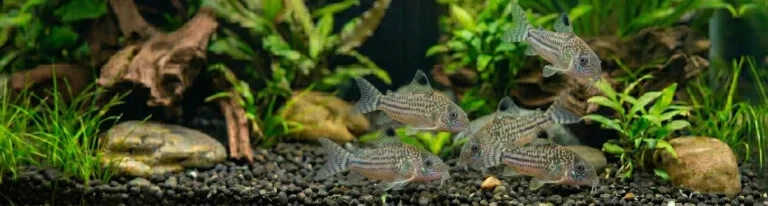
Last stop, the streams of South America and the night-time grazers of the community tank. They rasp algae and soft wood, and need algae wafers and vegetables to stay healthy. Our guide to feeding bottom dwellers covers them in detail.
A Gut Built for Greens
To understand why diet matters so much, go back to that rock face in Lake Malawi. Algae is low in energy, so a grazer has to eat a lot of it, slowly, all day. Over thousands of years these fish have evolved a long digestive tract to get every bit of goodness out of a bulky, plant-based meal.
That long gut is perfect for algae and a poor match for rich, meaty food. Protein-heavy meals move through slowly and can sit in the gut and ferment. Combined with stress or poor water quality, that's linked to the condition keepers call Malawi bloat.
Know the warning signs, because bloat moves fast:
- Loss of appetite - usually the first sign, often in a fish that normally pushes to the front
- A swollen belly - sometimes with scales starting to stand out
- Long, white, stringy droppings
- Hiding, or hanging near the surface and breathing quickly
If you spot these, act the same day. Do a 20–25% water change, stop feeding protein, and get advice on treatment quickly, because early treatment gives the fish its best chance. Our fish diagnosis guide is a good place to start.
Prevention is much easier than cure. A plant-based staple, small meals, clean water and a calm tank go a long way.
The Grazer's Menu
So what should you put on the menu? Think of the rock face again: mostly greens, with a little protein mixed in.
The staple
Our experts recommend a spirulina-based flake or pellet as the everyday food for every grazer. Check the label: spirulina, algae or vegetable matter should sit near the top of the ingredients, with protein moderate rather than high. Our guide to reading a fish food label shows you what to look for. You can browse suitable foods by the fish you keep in our fish food by species section.
The salad bar
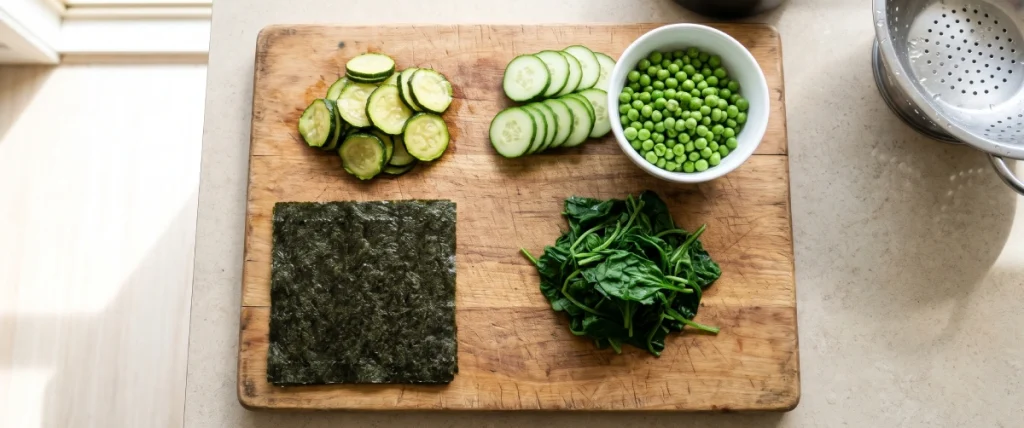
Once or twice a week, swap a regular meal for fresh vegetables. Most of what you need is probably already in your crisper, and your grazers will mob it.
| Vegetable | How to prepare it | Good for |
|---|---|---|
| Zucchini | Slice into rounds, blanch for 1–2 minutes, cool | Mbuna, mollies, bristlenose |
| Cucumber | Slice thinly; blanch briefly to soften | Bristlenose, mollies |
| Peas | Thaw frozen peas, pop off the skins, squash lightly | Most grazers; helps with constipation |
| Spinach or cos lettuce | Blanch until limp, cool | Mbuna, Tropheus, mollies |
| Plain nori | Unseasoned sheets only, clipped to the glass | Mbuna, Tropheus |
A few rules keep the salad bar safe:
- Wash vegetables well, and peel anything that might carry pesticide residue
- Never use anything seasoned, salted, oiled or cooked in butter
- Let everything cool to room temperature before it goes in
- Weigh it down with a plant weight or a clean fork so it sinks
- Take out whatever's left after 12–24 hours, before it starts to break down
The occasional treat
Grazers don't need to go without protein completely. Daphnia and brine shrimp make good occasional treats, once a week at most for mbuna and not at all for Tropheus if you want to play it safe. Leave the bloodworm and prawn for your other fish.
Little and Often
Back on the lake, nobody serves the mbuna two big meals a day. They nibble from morning till dusk. You can't copy that exactly, but you can come closer.
For grazers, our experts recommend 2–3 small meals a day rather than one or two larger ones. Keep each meal to what's eaten in about a minute or two. Smaller portions pass through that long gut more easily, and spreading them out gives territorial fish like mbuna less to fight over.
If you can't be home in the middle of the day, two small meals are fine. What matters most is that each one is small. A weekly fasting day suits grazers well too, giving their digestion a chance to clear. Our guide to how much and how often to feed your fish explains the fasting day in more detail.
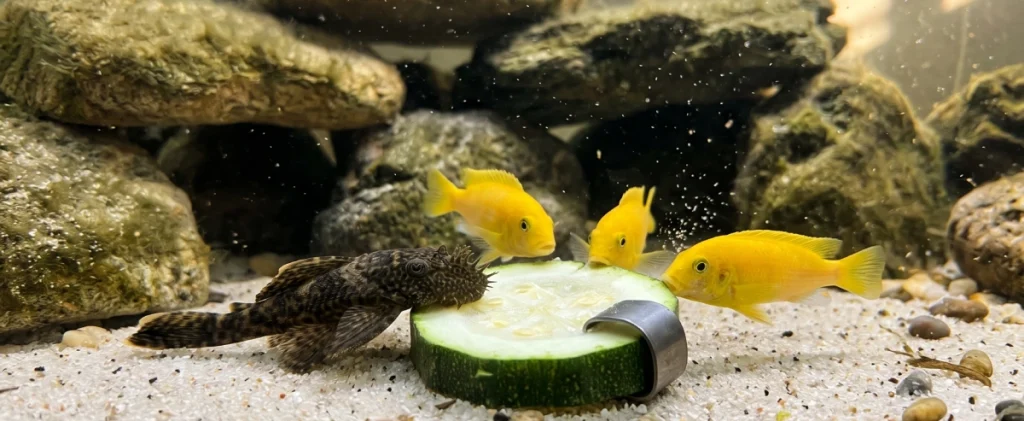
One more thing that helps: leave the algae. In a grazer tank, a little green growth on the back glass and the rocks works like a snack bar that never closes. Clean the front glass so you can see in, and let the fish tend the rest.
Quick Reference
| Feature | Requirement | Why |
|---|---|---|
| Staple | Spirulina or vegetable-based flake or pellet | Matches a gut built for plant matter |
| Protein | Moderate; meaty treats once a week at most | Rich protein is linked to bloat in grazers |
| Fresh veg | 1–2 times a week, blanched and unseasoned | Fibre, variety and natural foraging |
| Meals | 2–3 small meals a day, each eaten in 1–2 minutes | Grazers are built to nibble, not feast |
| Algae | Leave some on the back glass and rocks | A natural, all-day food source |
| Warning signs | Off food, swollen belly, white stringy droppings | Bloat moves fast; act the same day |
Myths: Fact vs. Fiction
"More protein means brighter colours." Reality: In grazers, too much protein is more likely to cause bloat than better colour. Spirulina and other algae carry natural pigments that bring out their colour safely.
"All Malawi cichlids eat the same food." Reality: Mbuna are grazers, while peacocks and many haps need more protein. In a mixed tank, feed a plant-based staple to everyone and add meatier foods sparingly.
"Algae in the tank means I'm doing something wrong." Reality: For grazers, a little algae on the rocks and back glass is a healthy, natural snack. Keep the front glass clean and let them graze the rest.
Back to the Rocks
Look at your tank in the late afternoon light. The rocks at the back carry a soft green film, and your mbuna are working over it, yellow and blue, nipping and scraping exactly as their cousins do on the shores of Lake Malawi. A slice of zucchini sways under its plant weight, already half gone.
It's a small piece of that clear, warm lake, right there in your living room.