School’s In: Setting Up the Perfect Tetra Tank
In This Guide
- 1. The Beginner’s Guide to a Schooling Fish That Never Grows Old
- 2. Why are Tetras Considered the Perfect ‘Beginner Fish’?
- 3. What Exactly Is a Tetra?
- 4. Why Tetras Need a Proper Setup
- 5. How Much Space Do Tetras Need?
- 6. The Tetra Starter Kit — What You Need Before Day One
- 7. The Filter — Gentle and Reliable
- 8. The Heater — Essential Year-Round
- 9. The Lid
- 10. Plants & Environment — Where Tetras Come Alive
- 11. An Invisible Science — the Nitrogen Cycle
- 12. Choosing Your Tetras — and Their Community
- 13. Feeding Your Tetras
- 14. Ongoing Maintenance — the Weekly Rhythm
- 15. Quick Reference: Tetra Setup at a Glance
- 16. Common Tetra Myths: Fact vs. Fiction
The Beginner’s Guide to a Schooling Fish That Never Grows Old
We all need good friends — and nowhere is this more true than for a tetra in a tank.
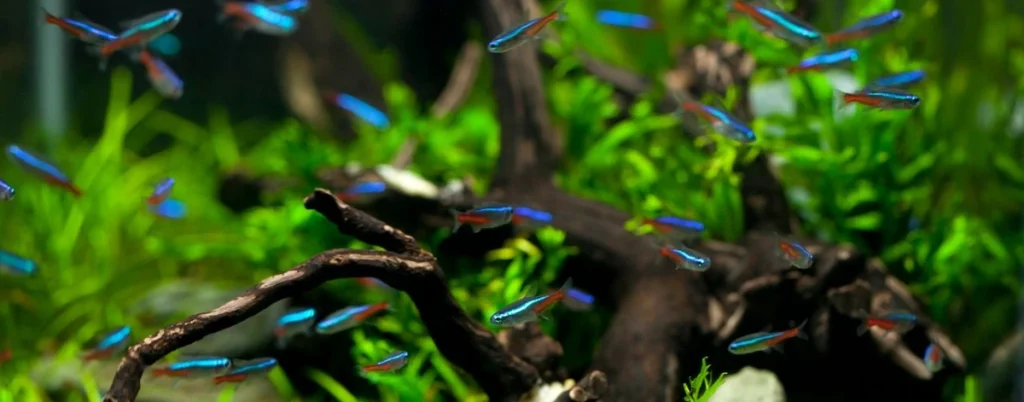
Tetras are some of the most beautiful and vibrant freshwater fish in the fishkeeper’s world. With their shimmering reds, fiery oranges, and gorgeous iridescent blues, a tank full of tetras is less like a fish tank and more like a living oil painting. But they only give you their stunning colours and amazing synchronised displays if you treat them right — and that starts with creating a community.
Like a lot of people, tetras are sociable creatures and need to be part of a group to feel secure and stay healthy. If you keep them on their own or in groups of less than six fish, they will get stressed — and in the fish world, that means constant fear, faded colours, aggressive behaviour, and poor health outcomes.
Ultimately, if you have a larger group — of 10 or more tetras — you’ll have much happier, more confident fish — and the colours of your tank will bloom like a bouquet of flowers!
Why are Tetras Considered the Perfect ‘Beginner Fish’?
It’s no surprise that tetras are often the first fish that the new aquarium owner buys. These beautiful little fish are famously peaceful, adaptable, and available in enough varieties to keep you engaged and inspired for years.
But ‘beginner fish’ doesn’t mean ‘no thought required’. A tetra school that truly thrives — vivid, active, and always swimming together — needs a tank set up specifically for them. Here’s how to get it right.
What Exactly Is a Tetra?
Tetras belong to the characin family, with more than 150 recognised species kept in aquariums worldwide. The name comes from the Greek word for “four”, referring to a distinctive fourth set of paired fins found on these fish. Most are native to the slow-moving rivers and streams of the Amazon basin, although some species like the popular Congo Tetra hail from Africa.
The varieties you’re most likely to encounter at LiveFish and other Australian aquarium stores include:
- Neon Tetras — the iconic red and bright blue-striped tetra, whose striking colours have made it one of the most popular aquarium fish in the world
- Cardinal Tetras — larger than neons, with the red colouring extending the full length of the body rather than just the back half; it prefers slightly warmer, softer water
- Rummy Nose Tetras — silver-bodied with a vivid red face and a striking black-and-white barred tail; one of the tightest schooling species available
- Ember Tetras — tiny, glowing orange fish; perfect for smaller tanks and nano setups
- Black Skirt Tetras — broader-bodied with flowing black fins; one of the hardiest tetra species available
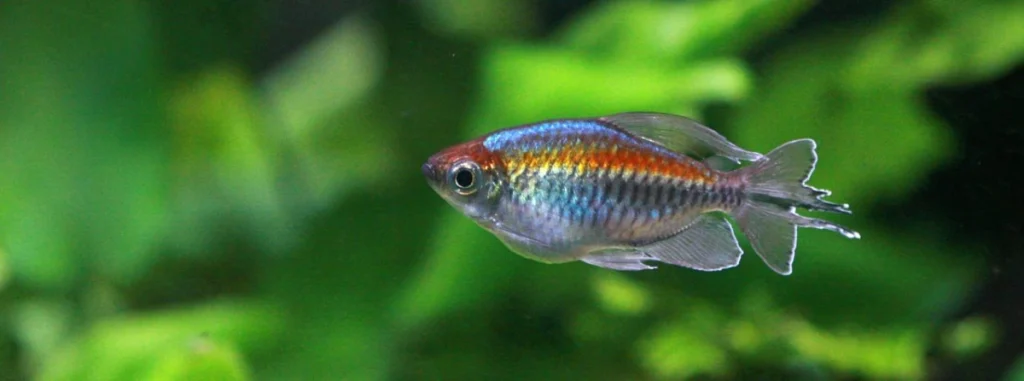
- Congo Tetras — larger and more impressive, with iridescent blue, orange, and violet colouring; needs a bigger tank than most other tetras
Most small tetra species reach 3–5cm in length. In a well-maintained tank, they typically live for 5–8 years.
Why Tetras Need a Proper Setup
Tetras have a reputation for being tough little fish, and that reputation is partly earned. But there is a version of tetras that most beginners never see, because their tank wasn’t quite right.
Tetras kept in proper conditions — the right temperature, the right group size, the right environment — school tightly and constantly. They display full colours, and dart and turn and flash. Tetras kept in poor conditions, on the other hand, do the opposite; they scatter, lose colour, hide in corners, and become susceptible to disease.
One important note for beginners: while tetras are often marketed as “ideal first fish”, they should never be added to a brand-new, uncycled tank. They are highly sensitive to even minor ammonia and nitrite spikes — more so even than goldfish or guppies — and a new tank without established beneficial bacteria will stress or kill them quickly. The nitrogen cycle comes first. More on that shortly.
How Much Space Do Tetras Need?
Tetras are small, but they are schooling fish — and schooling fish need numbers, and numbers need room.
40 litres is a realistic minimum for a small school of six to eight nano tetras like Neons or Embers. 60–80 litres is the sweet spot for a proper, active school of 10 or more tetras, or for mixing a couple of species. Larger tetras like Congo Tetras need 100 litres or more.
Long tanks suit tetras better than tall ones. They swim in the middle and upper levels of the tank, and use the length of the tank to school and turn. A long 60-litre tank will serve a tetra community far better than a tall 60-litre tank.
The group size rule: Our experts recommend a minimum of six of the same species, and more is genuinely better. Tetras are only truly comfortable — and only display their natural schooling behaviour — when they have enough of their own kind. A group of 10 or 12 will school more tightly and behave more naturally than a group of four or five.
The Tetra Starter Kit — What You Need Before Day One
Buy your gear at least two weeks before you buy your fish. This is especially true of tetras, which are particularly sensitive to new-tank conditions.
The Filter — Gentle and Reliable
Tetras come from slow-moving and still water environments. Strong currents stress them and make it harder for them to school. The goal is consistent biological filtration with a gentle outlet.
Good options include:
- Sponge filters — gentle, effective, and safe for smaller tetras; an excellent choice for nano species like Embers
- Hang-on-back filters with the flow baffled or directed against the glass to diffuse the current
- Canister filters with a spray bar or lily pipe to spread the output gently across the surface
Avoid running a filter rated for a larger tank at full power. Consistent and gentle is always the right call for tetras.
You can find aquarium filters at LiveFish suited to community setups across a range of tank sizes.
The Heater — Essential Year-Round
Tetras are tropical fish. Most species prefer a temperature range of 22°C–26°C, though Cardinal Tetras do best at slightly warmer temperatures (25–28°C), and some hardier species like Black Skirt Tetras can tolerate slightly cooler water.
In most Australian homes, summer ambient temperatures land comfortably within range. But winter in Melbourne, Canberra and Tasmania is a different matter — unheated tanks can drop well below 20°C, which suppresses tetras’ immune systems and opens the door to disease.
An adjustable heater with a built-in thermostat set to 24–25°C is our experts’ recommendation for most tetra species. A 25W or 50W unit is sufficient for tanks up to 80 litres. LiveFish carries aquarium heaters well suited to smaller tropical community tanks.
The Lid
Tetras can and do jump when startled — more than you might expect from such small fish. Always fit a secure lid or mesh cover. This is especially important in the first few days after adding new fish to the tank, when they are more likely to be jumpy.
Plants & Environment — Where Tetras Come Alive
No section in this guide matters more for tetras than this one. A planted tank doesn’t just look better with tetras — it fundamentally changes how they behave.
In the wild, tetras live under the dense canopy of the Amazon and African rainforests, in water that’s naturally darkened by tannins and shaded by overhanging vegetation. Their colours — those neon blues, reds, and silvers — evolved to stand out in that dimly lit, plant-rich environment. In a sparse, brightly lit tank, they look good — but in a dark, planted tank, they look extraordinary.
Why plants matter for tetras:
- Dense planting gives the school places to retreat when startled, which reduces stress
- Plants absorb nitrates from the water, supporting overall water quality
- Low-light plants create the dim, natural conditions that tetras prefer
- The contrast between dark green plants and iridescent tetra colours is genuinely spectacular
Best plants for a tetra tank:
- Java Moss — low-light, low-maintenance, and creates excellent hiding places and structure throughout the tank
- Amazon Sword — broad-leaved, native to the tetras’ home range, and dramatic in a larger tank
- Hornwort/Foxtail — fast-growing, excellent for absorbing nitrates, and can be floated or planted
- Floating plants (Banana Lily or Water Lettuce) — these reduce surface light and create natural, dappled lighting that makes tetras look their absolute best
Substrate and lighting: Dark substrate enhances tetra colouration significantly. Their iridescent scales catch light differently against a dark background, and the effect is remarkable. Keep lighting moderate to subdued; very bright tanks make tetras uncomfortable and wash out their colours. If you have bright lights, floating plants will help to diffuse them.
If you use artificial plants, do the ‘nylon stocking test’ before buying them. Run a stocking over the surface and if it snags, it’ll snag your tetras’ fins too.
An Invisible Science — the Nitrogen Cycle
This step cannot be skipped — and it’s especially critical with tetras, which are more sensitive to water quality than many other beginner fish.
A brand-new tank may look clean — but that does not mean it is safe. Without beneficial bacteria to process fish waste, ammonia levels can rise to dangerous concentrations within 24–48 hours of adding your fish. For tetras, this is particularly serious — they are sensitive enough that new-tank conditions alone can trigger disease outbreaks and losses.
Here is how the cycle works:
- Ammonia — produced by fish waste and uneaten food, ammonia is highly toxic.
- Nitrite — beneficial bacteria convert ammonia to nitrite. This is still toxic.
- Nitrate — a second group of bacteria converts nitrite to nitrate. This is manageable in low concentrations, and is removed by water changes.
The Pro Move: Add a small pinch of fish food to your empty, running, filtered tank every day for two to three weeks. Test the water with an aquarium test kit. When both Ammonia and Nitrite read 0ppm, your tank is cycled and ready. Only then should your tetras go in. For best results, let the tank run for a full two months before adding fish — tetras will genuinely reward the extra patience.
If you want to learn more about cycling your tank — you can read our article about How to Cycle your Fish Tank the Right Way.
Choosing Your Tetras — and Their Community
Once you’ve picked your species, buying enough of them is the single most important decision you will make. A group of six is a bare minimum. A school of 10 or 12 is where tetras really come into their own — the tighter schooling, the synchronised turning, the way 20 fish can move as a single organism. That is an experience well worth having.
Different tetra species can generally be kept together in a large enough tank, and they will often loosely school with similar-sized species. However, each species schools most naturally and most tightly with its own kind — a tank of 20 Neons will school more impressively than a tank of eight Neons, four Rummy Noses, and four Cardinals mixed together.
Because they’re peaceful fish, tetras are only happy being kept with other peaceful fish. If they’re in a tank with boisterous or larger fish, the resulting stress can quickly weaken their immune systems and affect the health of the whole school.
Compatible tankmates for tetras:
- Other small, peaceful tetra species
- Corydoras Catfish — a natural pairing; they occupy the bottom level while tetras swim mid-water
- Rasboras and small Danios — small schooling fish with a similar temperament and water requirements
- Nerite Snails and Amano Shrimp — excellent tank cleaners; most tetras ignore them
- Dwarf Gouramis — calm, slightly larger fish that will not bother small tetras, and offer a striking contrast in a planted tank
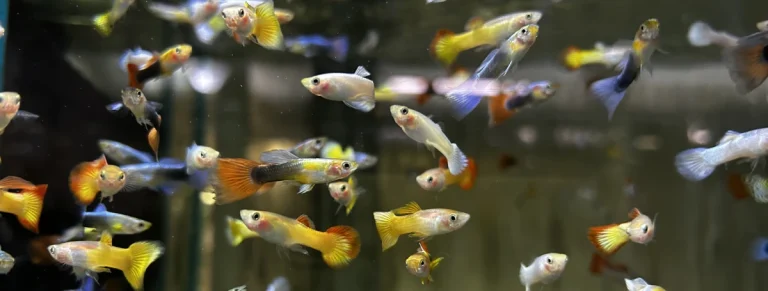
- Livebearers — friendly fish like Guppies and Platies mix well in communal setups
Tankmates to avoid:
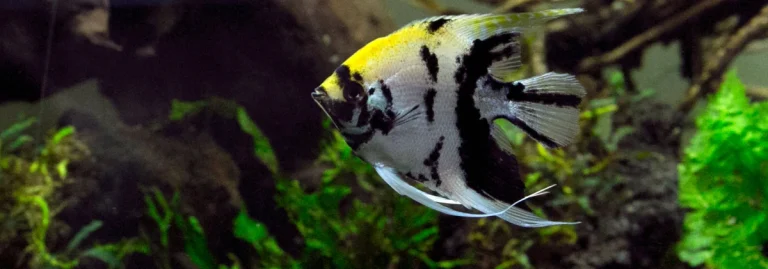
- Angelfish and large cichlids — adult angels will eat small tetras; if you really want an Angelfish, make sure you get a small one
- Bettas — unpredictable; some will attack tetras, especially the flowing-finned species
- Aggressive fin-nippers — somewhat ironic, given that some tetra species (Serpae Tetras in particular) are themselves fin-nippers and should not be mixed with long-finned fish
One species note: if you’re choosing between Neons and Cardinals, Cardinals are the more impressive fish — larger, more vividly coloured, and with red extending the full length of the body. They do prefer slightly warmer, softer water and are marginally less forgiving of water quality issues. Neons are slightly hardier and more readily available. Either way, buy from a reputable source and acclimatise them carefully.
Feeding Your Tetras
Tetras are omnivores with small mouths — and that second part matters the most. Standard flake food is often too large for nano species like Neons and Embers to eat comfortably.
Choose a micro-pellet or finely crushed flake as the daily staple. Two to three times a week, offer frozen foods: baby brine shrimp, daphnia, or micro-worms. These replicate the small invertebrates tetras feed on in the wild and make a visible difference to their colour and condition.
Feed small amounts twice daily — only what they consume in two or three minutes. Remove any uneaten food promptly. Fast them for one day a week. Good water quality is the foundation of tetra health, and overfeeding is the fastest way to compromise it.
You will find tetra-appropriate foods in the LiveFish food collection, including micro-sized options and frozen varieties suited to smaller species.
Ongoing Maintenance — the Weekly Rhythm
Tetras are more sensitive to water quality than goldfish or guppies, which makes consistent maintenance more important.
Weekly: Change 20–25% of your water using a gravel vacuum and replace it with fresh, dechlorinated tap water. A water conditioner removes chlorine from tap water instantly — always use it.
Monthly: Clean filter media in a bucket of old tank water. Never rinse it under the tap — chlorine kills the beneficial bacteria that your tank depends upon.
Ongoing: Tetras are a useful early warning system for water quality problems. If your school starts splitting up, losing colour, or hugging the bottom, test the water before anything else. A school of tetras in good water is impossible to look away from — they will let you know when something is wrong.
Quick Reference: Tetra Setup at a Glance
| Feature | Requirement | Why |
|---|---|---|
| Minimum tank size | 40–60 litres (species dependent) | Room for a proper school |
| Temperature | 22°C–26°C (Cardinals: 25–28°C) | Tropical species; stability essential |
| Filter flow | Gentle — baffled or diffused | Mimics slow-water natural habitat |
| Diet | Micro-pellet or fine flake + frozen varieties | Small mouths need appropriately sized food |
| School size | 6 minimum; 10–12 recommended | Schooling fish need numbers to thrive |
| Plants | Dense, with subdued lighting | Brings out tetras’ full colour and natural behaviour |
Common Tetra Myths: Fact vs. Fiction
Myth: “Tetras are the perfect fish for a new tank.” Reality: They are a great beginner fish in an established tank. But tetras are sensitive to ammonia and nitrite spikes and should never be the first fish in a new, uncycled setup. Cycle the tank fully first — ideally run it for two months before adding them.
Myth: “A few tetras are enough — they don’t need a big group.” Reality: Tetras kept in small numbers are stressed, scattered and pale. Tetras kept in groups of 10 or more are a different experience entirely — tight schooling, vivid colour, and consistent natural behaviour. Group size should not be optional.
Myth: “All tetras are the same.” Reality: There are more than 150 tetra species with meaningfully different care needs. Cardinal Tetras need warmer, softer water than Neons. Congo Tetras need larger tanks. Serpae Tetras can be fin-nippers that don’t belong with long-finned fish. Research your species before buying.
That living oil painting — 20 fish turning as one, flashing blue and red in the light — is not difficult to create. It just needs the right tank, the right number of fish, and a little patience before day one. Get these parameters right, and we guarantee your tetra school will be the first thing every visitor walks up to when they come through your door.