Nerite Snails: The Complete Keeper's Guide
In This Guide
- 1. Are nerite snails legal in Australia?
- 2. Why nerite snails are so hard to get here
- 3. Which nerite snails can you actually buy in Australia?
- 4. What nerite snails actually eat
- 5. How many nerite snails do you need?
- 6. The Australian water problem nobody warns you about
- 7. How to fix soft water for snails
- 8. Other parameters
- 9. Tank setup and tank mates
- 10. Good tank mates
- 11. Avoid
- 12. Acclimating new nerites
- 13. Nerite snail eggs: the white dots on your glass
- 14. Troubleshooting
- 15. My nerite snail is not moving. Is it dead?
- 16. The shell is going white, pitted or thin
- 17. My nerites keep dying
- 18. My nerite is floating
- 19. How long do nerite snails live?
- 20. What to buy when nerites are out of stock
- 21. Shipping nerite snails within Australia
- 22. Frequently asked questions
- 23. Are nerite snails banned in Australia?
- 24. Will nerite snails take over my tank?
- 25. Do nerite snails need a heater?
- 26. Can nerite snails live with shrimp?
- 27. Do I need a lid?
- 28. How small a tank can they go in?
- 29. Can I breed nerite snails?
- 30. Do nerite snails eat fish poop?
- 31. The short version
If you have searched for nerite snails in Australia, you have probably had the same experience as everyone else. Every guide you find is American, written in gallons, and features species you cannot buy here. Every Australian shop you check is sold out. And somewhere in a forum thread from 2015, three people are still arguing about whether they are banned.
Here is the straight answer, along with everything you actually need to know to keep them alive once you get some.
Are nerite snails legal in Australia?
Yes. Nerite snails are legal to own and legal to sell in Australia. They are not banned.
What is banned is importing them. Australia's live import rules allow ornamental fish to be brought in from approved countries under permit. Live aquatic invertebrates are a different category, and they are not permitted for the pet trade at all. Snails, shrimp, crayfish and molluscs cannot legally come across the border for your aquarium.
That single rule explains everything about nerite availability in this country.
Why nerite snails are so hard to get here
Because they cannot be imported, every nerite snail sold in Australia has to come from an Australian population. There are no shipments arriving from Indonesian or Malaysian farms the way there are for most tropical fish.
Fortunately, we have our own. Nerites are native to the tidal and freshwater river systems of northern Australia, mostly across the Northern Territory and far north Queensland. The snails you see for sale here are collected from those systems by a small number of licensed suppliers.
That creates a supply chain with some hard limits:
- Collection is seasonal. Access to collection sites depends on the weather and the wet season. There is no year-round tap to turn on.
- They cannot be farmed. Nerite larvae need brackish water to develop. In a freshwater tank the eggs simply never hatch. That is brilliant for you as a keeper, because it means they will never overrun your aquarium, but it also means no one can breed them commercially to fill gaps in supply.
- The supplier pool is tiny. A handful of operators service the entire country.
- Live freight is fragile. Summer heat embargoes, courier delays and interstate rules all interrupt distribution.
So when a batch lands, it moves. This is not a marketing line, it is just how the numbers work. A few hundred snails released to a national market of hobbyists disappears in days.
Want to know the moment they land? Nerite stock arrives in batches with no fixed schedule, and it does not last long. Join the LiveFish restock list and we will email you as soon as they are back in the tanks, before they hit social media. No spam, just a heads up when something hard to get becomes available. Join the restock list
Which nerite snails can you actually buy in Australia?
This matters more than most guides admit, because the overseas content that sends people looking for nerites features species that are not in the Australian trade.
What you will find here:
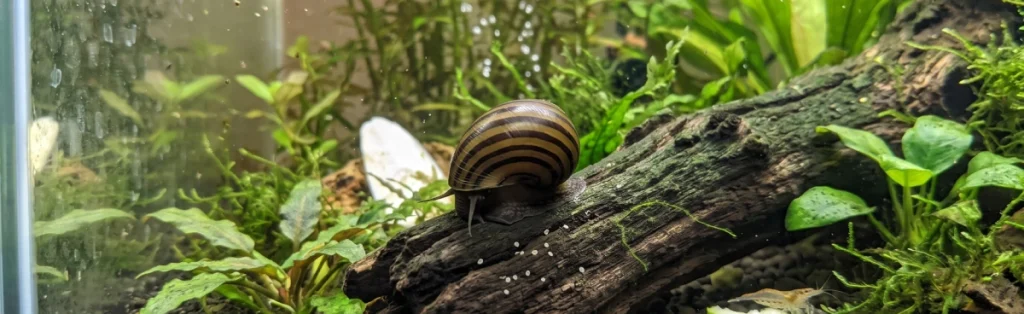
- Australian nerite (Clithon oualaniensis) is the main one. A true nano snail that tops out at around 1 cm. Shells come in yellows, oranges, reds, browns and olives, with patterns that look hand painted. No two are identical.
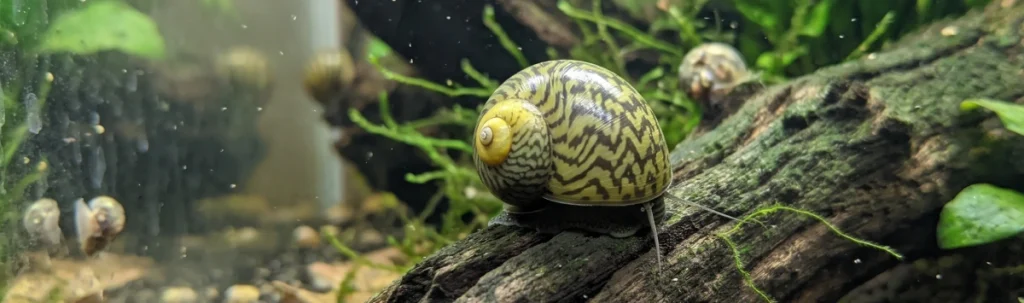
- Darwin nerite (Neritina violacea) is a locally collected species from NT coastal brackish and freshwater areas. Slightly larger, often sold under the Darwin name.
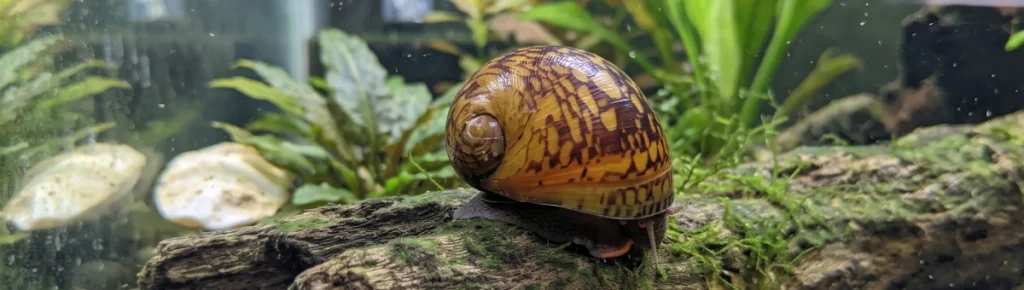
- Military helmet snail is a trade name for larger nerite types that appear occasionally.
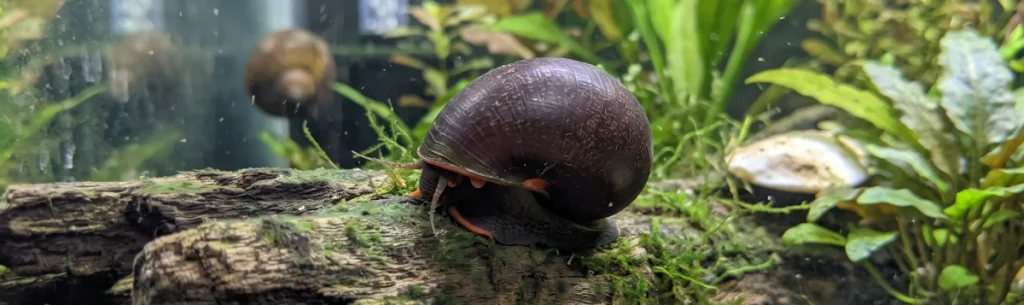
What you will mostly not find here: zebra nerites (Vittina natalensis), red racer and gold racer nerites (Vittina waigiensis), horned nerites, tiger nerites and olive nerites. These are the stars of American and European care guides. Some Australian stores use those names loosely on listings, so check the scientific name and the photo before you assume you are buying the snail from the YouTube video.
The practical upshot: use care advice written for the size and habits of what you actually own. An Australian nerite at 1 cm has different stocking maths to a 3 cm zebra nerite.
What nerite snails actually eat
Nerites have a reputation as the best algae eater in the freshwater hobby. That reputation is deserved, but only for certain types of algae. Being clear about this now will save you disappointment later.
| Algae type | Will nerites eat it? |
| Brown diatoms (new tank dust) | Yes, and fast |
| Green film algae on glass | Yes |
| Green dust algae | Yes |
| Green spot algae | Yes, slowly |
| Biofilm | Yes |
| Soft algae on plant leaves | Yes |
| Decaying plant matter | Yes |
| Black beard algae (BBA) | No |
| Green hair algae | No |
| Staghorn algae | No |
| Blue-green algae (cyanobacteria) | No |
If your problem is the tough, wiry, dark tufts of black beard algae on your driftwood, a nerite will not fix it. That is a job for spot dosing, better CO2 and nutrient balance, or amano shrimp. Buying nerites for a BBA problem is the single most common mistake we see.
Do nerite snails eat live plants? No. They graze algae and biofilm off leaves without damaging healthy plant tissue. They will clean up leaves that are already dying, which sometimes gets misread as plant damage. Nerites are safe in the most delicate planted tank you can build.
How many nerite snails do you need?
Overseas guides say one per five gallons. In litres, and adjusted for the smaller Australian species, here is a realistic starting point.
| Tank size | Australian nerites (~1 cm) | Larger nerite types (2 to 3 cm) |
| 20 L nano | 1 to 2 | 1 |
| 35 L | 2 to 3 | 1 to 2 |
| 60 L | 3 to 4 | 2 |
| 100 L | 5 to 6 | 3 to 4 |
| 200 L | 8 to 10 | 5 to 6 |
| 300 L | 12 to 15 | 7 to 9 |
Start at the low end. This is the counterintuitive part of snail stocking. Nerites are efficient enough to strip a tank of algae completely, and once the algae is gone, they starve. A tank with too many nerites and no food is a worse outcome than a tank with slightly too few.
If they clean everything and you still want to keep the full crew, feed them. An algae wafer or a slice of blanched zucchini two or three times a week works. Remove anything uneaten after a day.
The Australian water problem nobody warns you about
This is the section that matters most, and it is the reason a lot of Australian nerites die at the four to six month mark.
A snail shell is calcium carbonate. To build and maintain it, the snail pulls calcium out of the water. If the water has almost no calcium in it, or if it is acidic, the shell starts dissolving faster than the snail can repair it. You see pitting first, then thin white patches, then holes near the spire. From there the snail usually does not recover.
Nerites want a general hardness (GH) of roughly 6 to 12 dGH and a pH of 7.0 or above.
Now look at what comes out of the tap in most Australian capitals.
| City | Typical tap hardness | Approximate dGH | Suitable for nerites as-is? |
| Hobart | ~10 to 20 mg/L | ~1 | No, far too soft |
| Melbourne | ~15 to 29 mg/L | ~1 to 2 | No, far too soft |
| Canberra | Soft | ~1 to 2 | No |
| Darwin | Under 50 mg/L | ~2 to 3 | No |
| Sydney | ~30 to 58 mg/L | ~2 to 3 | No |
| Brisbane | ~80 mg/L | ~4 to 5 | Borderline |
| Adelaide | ~100 to 130 mg/L | ~6 to 7 | Generally yes |
| Perth | ~30 to 230 mg/L by zone | ~2 to 13 | Depends heavily on your suburb |
Figures are approximate averages from public water quality reporting and vary by supply zone and season. Test your own water rather than relying on the table.
If you live in Melbourne, Sydney, Hobart, Canberra or Darwin, your tap water is beautiful, soft, low mineral water. It is also nearly the worst possible water for a shelled invertebrate straight out of the tap. This is not a reason to avoid nerites. It just means one extra step.
How to fix soft water for snails
Pick one, not all four:
- Crushed coral. Put a small mesh bag of crushed coral in your filter, or mix a thin layer into the substrate. It dissolves slowly, raising GH, KH and pH together. Cheapest and most stable option.
- Cuttlebone. The same product sold for budgies. Snap off a piece and drop it in. Snails will graze on it directly. It floats until waterlogged, so weigh it down for a day.
- A GH booster or mineral supplement. Dose your change water to your target GH before it goes in the tank. Best option if you also keep shrimp, since it gives you precise control.
- Limestone or seiryu-style hardscape. Works, but slow and hard to dial back if you overshoot.
Whichever you choose, make the change gradually. Moving from 1 dGH to 8 dGH overnight is a shock that can kill snails just as effectively as soft water does. Raise it over two or three weeks.
Other parameters
| Parameter | Target |
| Temperature | 22 to 28 °C |
| pH | 7.0 to 8.2 |
| GH | 6 to 12 dGH |
| KH | 4 to 15 dKH |
| Ammonia | 0 ppm |
| Nitrite | 0 ppm |
| Nitrate | Under 30 ppm |
| Copper | Zero, always |
Copper is the one that kills whole tanks. It is lethal to every invertebrate at trace levels. Check the ingredients on any medication, algaecide or plant fertiliser before it goes in a tank with snails or shrimp. Many white spot and general cure treatments are copper based. If you need to medicate the fish, move the snails out first.
The tank also needs to be fully cycled before snails go in. If you are not sure what that means, read our guide on cycling a fish tank first.
Tank setup and tank mates
Put a lid on it. Nerites are genuine escape artists. They climb to the waterline to graze the mineral crust left by evaporation, then keep going. An open-top tank will eventually give you a dried out snail on the floorboards. Cover the gaps around filter cables and heater cords too.
Give them surfaces. Driftwood, smooth rocks and broad-leaved plants are their pantry. More surface area means more biofilm and more food.
Do not drop them in upside down. Nerites struggle to right themselves, particularly the small Australian species. A snail stuck on its back on open substrate can die there. Always place them on the glass or on hardscape, foot down, and check the tank for upside down snails during maintenance. Flipping one back over takes two seconds and saves its life.
Good tank mates
Small peaceful community fish, including rasboras, ember tetras, pygmy corydoras, otocinclus and endlers. Neocaridina and caridina shrimp are excellent companions and occupy a slightly different cleaning niche. Other nerites are fine, they are not territorial.
Avoid
- Pufferfish. Any species. They eat snails, that is the entire point of them.
- Loaches, particularly clown and yoyo loaches.
- Assassin snails. The name is accurate.
- Most cichlids and larger, boisterous fish.
- Crayfish and yabbies.
Bettas are a maybe. Many bettas ignore nerites completely. Some will peck at the snail's foot or antennae, especially when it is upside down and exposed. It comes down to the individual fish, so watch the first few days closely.
Acclimating new nerites
Snails are more sensitive to sudden water chemistry changes than most fish. The float-the-bag method is not good enough.
- Turn off the tank lights to reduce stress.
- Empty the bag, snails and all, into a small clean container.
- Set up a drip line using airline tubing with a knot or valve to slow the flow to two or three drips per second.
- Drip tank water into the container for 45 to 60 minutes, until the volume has roughly tripled.
- Move the snails by hand into the tank. Do not tip the bag water in.
- Place each one right side up on the glass or on driftwood.
Do not be alarmed if they sit still for the first day or two. That is normal after transport.
Nerite snail eggs: the white dots on your glass
This is the number one complaint from new nerite keepers, so let's set expectations.
Female nerites lay small, hard, white egg capsules on any solid surface. Glass, driftwood, rocks, heaters, filter intakes, and sometimes on the shells of other snails. Each capsule holds a few dozen microscopic eggs. They look like sesame seeds, and they show up most obviously against dark driftwood.
They will not hatch. Nerite larvae require brackish water to develop. In a freshwater aquarium the capsules are inert. You will never get a population explosion, which is precisely why nerites are recommended over most other aquarium snails.
They are also very hard to remove. The snail effectively glues them down.
- On glass: a new razor blade in a scraper handle, or an old plastic loyalty card if your tank is acrylic and you are worried about scratches. Never use a metal blade on acrylic.
- On driftwood and rocks: a stiff toothbrush, and patience. You will not get all of them. Many keepers tie java moss over the worst patches and let it cover the marks.
- After scraping: siphon the loose capsules out with a gravel vac during your next water change.
Can you avoid them? Only by keeping males. There is no reliable way to sex nerites at point of sale, so in practice, no. Some keepers report horned nerites eating other nerites' eggs, but this is anecdotal.
Honestly, most people stop noticing them after a month. If the aesthetics genuinely bother you, that is worth knowing before you buy rather than after.
Troubleshooting
My nerite snail is not moving. Is it dead?
Not necessarily. Nerites routinely sit still for 24 to 48 hours, and they are more active at night. Before you panic:
- Check the trapdoor. The operculum is the hard plate that seals the shell opening. If it is closed tight, or closes when you touch it, the snail is alive.
- The smell test. Lift the snail out and smell it. A dead snail is unmistakable, and the odour is powerful. A living one smells of nothing.
- If it is dead, remove it immediately. A decomposing snail will spike ammonia quickly in a small tank.
If it is alive but has not moved in three or more days, test your water. Ammonia, nitrite, a pH swing or a sudden hardness change are the usual culprits.
The shell is going white, pitted or thin
Shell erosion. Your water is too soft, too acidic, or both. Go back to the Australian water section above and add a calcium source. Existing damage will not reverse, but you can stop it getting worse, and new shell growth will come in healthy.
My nerites keep dying
Work through this list in order:
- Copper. Any medication, fertiliser or algaecide added recently. This kills fast and kills everything.
- Uncycled tank. Test for ammonia and nitrite. Both should read zero.
- Soft water. Test GH. Under 4 dGH is a slow death sentence.
- Upside down snails. Check under and behind hardscape.
- Starvation. In a very clean tank with no algae and no supplemental feeding, they will slowly waste away.
- Acclimation shock. If they died within the first week, this is the most likely cause.
My nerite is floating
Occasional floating is normal, usually a trapped air bubble. Persistent floating alongside inactivity points to a water quality problem. Test first.
How long do nerite snails live?
One to three years in good conditions, with most Australian keepers seeing around one to two years. Small species tend toward the shorter end. Stable water and adequate calcium are the two biggest factors you control.
What to buy when nerites are out of stock
Because nerite supply is genuinely unpredictable, it helps to know your options.
- Amano shrimp handle hair algae and general detritus far better than nerites do. Also hard to get in Australia, and also worth being on a waitlist for.
- Neocaridina shrimp (cherry shrimp) are readily available, breed in your tank, and give you a self-sustaining clean-up crew. They will not scrape hard green spot algae off glass the way nerites do, but they cover biofilm and leftover food well.
- Mystery snails are widely available and full of personality, but they are much larger, produce noticeably more waste, and will breed in freshwater. They are also more inclined to sample soft plants.
- Otocinclus are excellent on soft green film algae in groups of six or more. They need an established tank with mature biofilm, so do not add them to a new setup.
- Bristlenose plecos work in larger tanks but are too big and too messy for nano setups.
None of these is a straight substitute. Nerites occupy a particular niche: small enough for a nano tank, plant safe, incapable of breeding out of control, and better than anything else in the hobby at scraping hard surfaces clean.
They are worth waiting for. Rather than checking the site every week, let us tell you. Add your email to the LiveFish nerite restock list and you will get a single message the day new stock lands. [Notify me when nerites are in stock]
Shipping nerite snails within Australia
Every state sets its own rules on importing live aquatic animals, and those rules are separate from the federal import laws discussed at the top of this article. Tasmania, Western Australia and the Northern Territory all have restrictions on live aquatic stock arriving from interstate, and permit requirements vary.
Rules change, so check the current shipping restrictions on our delivery page before ordering rather than relying on a blog post.
A few practical points for live invertebrate freight:
- Express post only, and always to an address where someone can receive the parcel.
- Avoid ordering into extreme heat. Most reputable Australian livestock retailers pause dispatch during summer heatwaves, and that is a good sign, not a bad one.
- Open the parcel and start acclimation the day it arrives.
- Photograph or video any dead-on-arrival animals in the unopened bag. Every DOA policy in the country requires that evidence.
Frequently asked questions
Are nerite snails banned in Australia?
No. They are legal to keep and sell. Importing live aquatic invertebrates into Australia is not permitted, which is why all Australian nerites come from local collection and why supply is limited.
Will nerite snails take over my tank?
No. Their eggs cannot hatch in freshwater. This is the main advantage they have over almost every other aquarium snail.
Do nerite snails need a heater?
In most of Australia, yes. They do best between 22 and 28 °C. Unheated tanks in Melbourne, Hobart, Canberra or Adelaide will drop well below that in winter.
Can nerite snails live with shrimp?
Yes, and they are one of the best pairings in the hobby. Both are copper sensitive and both like the same stable, mineral-rich water.
Do I need a lid?
Yes. Nerites climb out. It is not occasional, it is a defining habit of the species.
How small a tank can they go in?
20 litres is a comfortable minimum for one or two Australian nerites, provided the tank is cycled and stable. Smaller volumes swing in temperature and chemistry too quickly.
Can I breed nerite snails?
Not practically. The larvae need brackish water and a specific salinity progression to develop. There are almost no documented cases of successful hobbyist breeding.
Do nerite snails eat fish poop?
No. That is a persistent myth. They eat algae, biofilm and decaying plant matter. Waste still needs a filter and water changes.
The short version
Nerite snails are the best hard-surface algae grazers available to Australian aquarists, they are completely plant safe, and they cannot breed out of control. They will not touch black beard or hair algae. Most Australian tap water is too soft for their shells, so add crushed coral or a mineral supplement. Keep a lid on the tank, keep copper out of it, and place them right side up.
They are hard to get because they legally cannot be imported and can only be collected locally in limited numbers. That is not going to change.
Be first in line next time. Nerite stock at LiveFish sells out within days of landing. Join the restock list and we will email you the moment they are available, so you are not refreshing the page hoping to get lucky. [Sign up for nerite restock alerts]
Information in this article is general in nature. Biosecurity and state transport rules for live aquatic animals change over time, so always check current requirements with the relevant authority or with us before ordering.