Not Quite Jaws: Bala, Red Tail & Rainbow Shark Care Guide
In This Guide
- 1. Not Sharks, and Not the Same Fish
- 2. Meet the Sharks
- 3. Space: Bigger Than You Think
- 4. The Starter Kit
- 5. The Filter
- 6. The Heater
- 7. The Lid
- 8. Setting the Scene
- 9. An Invisible Science: the Nitrogen Cycle
- 10. Choosing Tank Mates
- 11. Feeding
- 12. The Weekly Rhythm
- 13. Quick Reference: Freshwater Sharks at a Glance
- 14. Myths: Fact vs. Fiction
It's doing laps of the shop tank, 5cm of polished silver with black-edged fins, and it looks exactly like a shark in miniature. You can already picture it cruising the front of your aquarium. Most people can, which is why the bala shark is one of the most impulse-bought fish in the hobby.
What the label rarely mentions is that this little fish can reach 30cm, wants to live in a group, and will still be going strong a decade from now. Its cousins, the red tail and rainbow sharks, stay much smaller but bring a territorial streak that can turn a calm community tank upside down.
None of that makes them bad fish. All three are hardy, active and full of character. They simply need the right tank from day one, and that comes down to a handful of decisions you make before you buy.
Not Sharks, and Not the Same Fish
Freshwater sharks aren't sharks at all. They belong to the carp family and earned the name from their torpedo-shaped bodies and tall, triangular dorsal fins.
The bigger misunderstanding is lumping all three together. The bala is a sociable open-water swimmer. The red tail and the rainbow are bottom-dwelling loners that claim a patch of the tank and guard it. Set them all up the same way and at least one of them ends up in the wrong tank.
Meet the Sharks
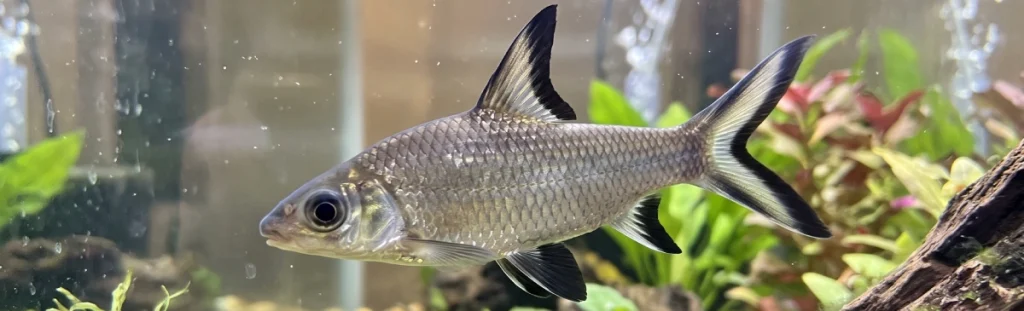
The Bala Shark (Balantiocheilos melanopterus) is the gentle giant of the group. Silver, fast and a little nervous, it comes from the rivers of Southeast Asia and lives for 8–10 years. It's peaceful with other fish, but it startles easily and needs company of its own kind to feel safe.
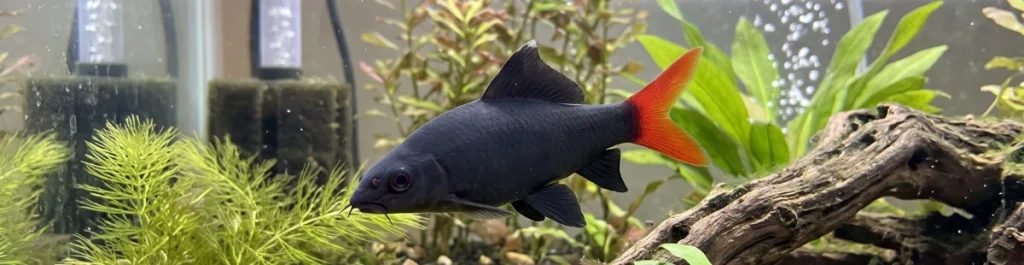
The Red Tail Shark (Epalzeorhynchos bicolor) is velvet black with a tail the colour of a fire engine. It comes from Thailand and is now critically rare in the wild, so the fish in the hobby are captive bred. At 12–15cm it's the smallest of the three and easily the bossiest.
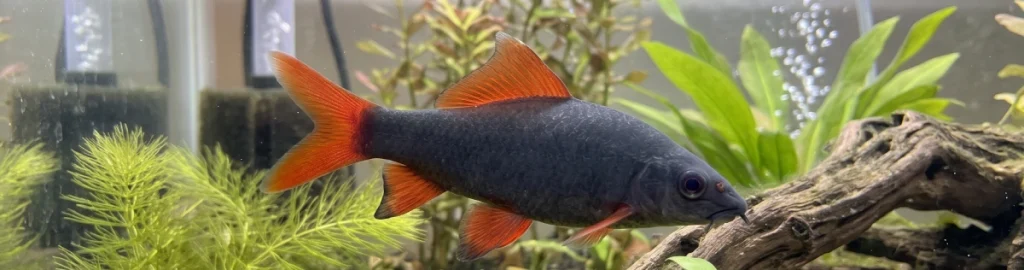
The Rainbow Shark (Epalzeorhynchos frenatum) looks similar, but every fin is red, not just the tail. It's also sold in an albino form, and the colourful GloFish sharks are rainbow sharks too. It grows to around 15cm and is territorial, though a little more tolerant than the red tail.
| Shark | Adult size | Temperament | Keep as | Minimum tank |
|---|---|---|---|---|
| Bala | 30cm+ | Peaceful but skittish | A group of 4 or more | 500 litres, 180cm long |
| Red Tail | 12–15cm | Territorial and bossy | One per tank | 200 litres, 120cm long |
| Rainbow | Around 15cm | Territorial | One per tank | 200 litres, 120cm long |
You'll find all three in our Freshwater Sharks range.
Space: Bigger Than You Think
A young bala looks perfectly happy in a 100-litre tank, and that's the trap. Balas grow quickly, and a fish built for open rivers needs room to swim. Our experts recommend at least 500 litres and 180cm of length for a group of adults. In a cramped tank they panic and crash into the glass. Keep them in groups of four or more, too. A lone bala is a pale, jumpy fish.
For red tails and rainbows, length matters more than volume. Each one patrols a territory along the bottom, and a 120cm tank of around 200 litres gives one adult enough ground while leaving room for everyone else. In a smaller tank the whole aquarium becomes its territory, and every other fish becomes an intruder.
The Starter Kit
Buy your gear at least two weeks before you buy your fish.
The Filter
All three come from flowing rivers and like clean, well-oxygenated water with a bit of current. Balas are especially sensitive to ammonia. A canister filter that turns the tank over four to five times an hour suits these fish well.
The Heater
These are tropical fish, comfortable at 22–27°C, with 24–26°C the sweet spot. A tank this size can lose a lot of heat through a Melbourne or Canberra winter, so fit an adjustable heater with a thermostat. Allow roughly 1 watt per litre.
The Lid
All three are jumpers. Balas bolt when startled, and red tails have a habit of turning up in the filter or on the floor. Fit a tight lid and close the gaps around cables.
Setting the Scene
In the wild, red tails and rainbows spend their days grazing over rocks and sunken wood, chasing rivals off their favourite spots. Give them the same in the tank: caves, driftwood and rock piles that break up the view. When tank mates can slip out of sight, there's far less chasing. The wood also grows a film of algae they love to graze.
Sand or smooth gravel works for all three. Hardy plants like Java Fern and Anubias, tied onto wood, cope well. Here's some honest advice, though: red tails will nibble soft-leaved plants.
Balas want the opposite layout. Keep plants and décor to the back and sides, and leave the front and middle open for swimming. A regular routine of lights on and off at the same times each day helps these nervous fish settle.
An Invisible Science: the Nitrogen Cycle
A brand-new tank looks clean, but it has none of the bacteria that make fish waste safe. Fish produce ammonia, which is toxic. One group of bacteria turns ammonia into nitrite, which is still toxic. A second group turns nitrite into nitrate, which your weekly water changes remove. Growing those bacteria is called cycling, and it has to happen before any fish go in.
The Pro Move: Add a small pinch of fish food to your empty, running tank every day for two to three weeks. Test the water. When ammonia and nitrite both read 0ppm, the tank is ready.
You can read our article on How to Cycle a Fish Tank the Right Way for the full method.
Choosing Tank Mates
The rule that matters most is one red tail or one rainbow per tank, never both. They see each other as rivals and will fight until one gives up or dies.
The best companions for red tails and rainbows are quick fish that live higher in the water and won't compete for the bottom:
- Danios: fast, tough and always in the upper water
- Rainbowfish: active, colourful and big enough to hold their own
- Robust barbs: a good match for an energetic shark
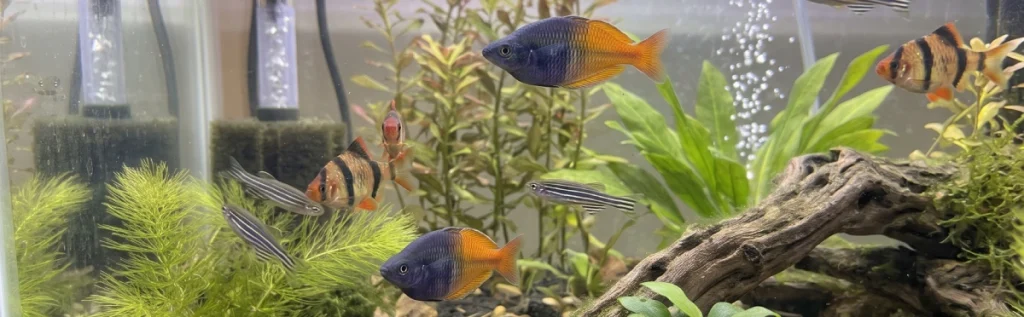
Keep other bottom dwellers like corydoras and loaches out of a red tail tank, as they'll be chased constantly. Slow, long-finned fish like bettas are a poor match too.
Balas are peaceful, but adults have big mouths and will eat small fish like neon tetras. Pair them with larger, calm fish such as rainbowfish, gouramis and bigger barbs. Our Fish Tank Mates Guide covers more pairings.
Feeding
All three are omnivores. Balas feed in open water, so a quality flake or small pellet makes a good staple. Red tails and rainbows feed on the bottom, so give them sinking pellets and algae wafers, plus blanched zucchini now and then. Two or three times a week, offer frozen bloodworm, brine shrimp or daphnia.
Feed once or twice a day, only what they finish in two to three minutes, and fast them one day a week.
The Weekly Rhythm
Weekly: Change 25% of the water with a gravel vacuum, and treat the new water with a conditioner to remove the chlorine and chloramine in Australian tap water.
Monthly: Rinse filter media in a bucket of old tank water, never under the tap.
Always: Watch the colours. A red tail's tail fades when it's stressed or the water is off, so a dull tail tells you to test the water.
Quick Reference: Freshwater Sharks at a Glance
| Feature | Requirement | Why |
|---|---|---|
| Tank (bala group) | 500 litres+, 180cm long | Fast schooling fish that reach 30cm |
| Tank (red tail or rainbow) | 200 litres+, 120cm long | Room for one territory and other fish |
| Temperature | 24–26°C | Tropical river fish |
| Numbers | Balas in 4+; one red tail or rainbow | Balas need company, the others need space |
| Décor | Caves, wood and rock | Breaks line of sight and cuts chasing |
| Lid | Tight-fitting | All three jump |
Myths: Fact vs. Fiction
Myth: "It'll only grow to the size of the tank." Reality: A bala grows towards its full 30cm regardless. A small tank doesn't keep it small, it stunts and stresses it.
Myth: "Freshwater sharks are aggressive, like real sharks." Reality: Balas are timid. The red tail and rainbow are territorial, and their temper is aimed at fish that look like them or share their patch of the bottom.
Myth: "Two red tails will keep each other company." Reality: They'll fight. One per tank keeps the peace.
That 5cm silver torpedo in the shop tank can grow into something spectacular: a school of balas sweeping the length of a big tank, or a velvet-black red tail patrolling its cave like it owns the place. Plan for the adult fish rather than the one in the bag, and you'll have a shark tank that turns heads for the next ten years.