The King of the Aquarium: Discus Fish Care, Water Parameters, Feeding and Common Mistakes
In This Guide
- 1. The Reputation Problem
- 2. Meet the Discus
- 3. Water Parameters: Warm, Soft and Steady
- 4. Space and the Starter Kit
- 5. The Filter
- 6. The Heater
- 7. The Lid
- 8. The Environment
- 9. An Invisible Science: the Nitrogen Cycle
- 10. The First Week
- 11. Choosing Tank Mates
- 12. Feeding
- 13. The Weekly Rhythm
- 14. Common Mistakes
- 15. Quick Reference: Discus at a Glance
- 16. Myths: Fact vs. Fiction
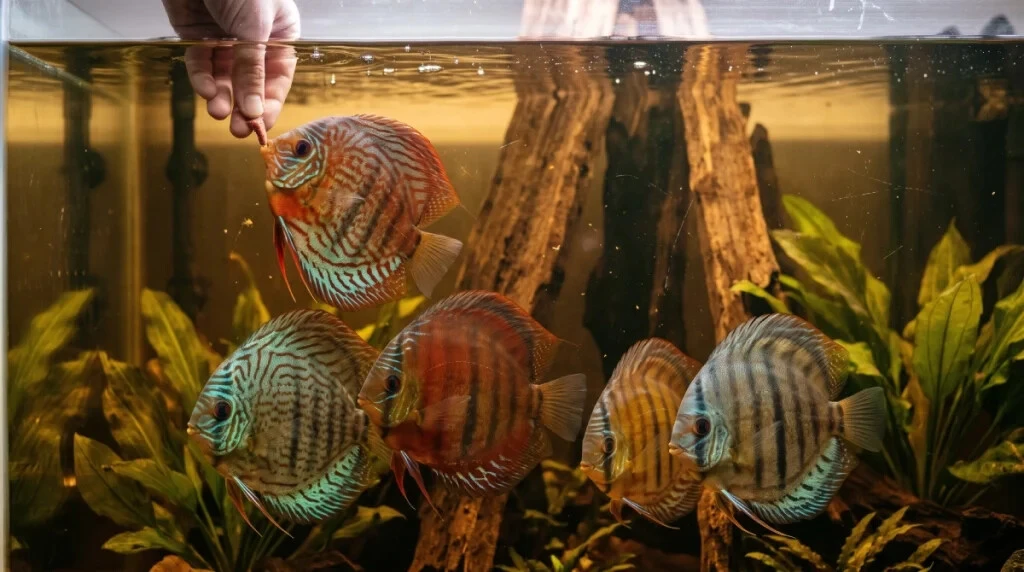
You walk into the room and a group of discus drifts to the front glass to meet you. Round as dinner plates, patterned in turquoise, red and gold, they hang in the water like slow-moving stained glass. One of them takes food straight from your fingers.
It's one of the most beautiful sights in fishkeeping. It's also a scene many first-time discus keepers never get to see, because their fish spend the first weeks hiding in a corner, refusing food, while the owner panics.
Discus have a reputation for being difficult. The truth is kinder than that. They're sensitive, but they're also consistent: get the warmth, the water and the routine right, and they settle into confident, hungry, long-lived fish.
The Reputation Problem
Most of the horror stories online come from wild-caught discus or from keepers chasing exact water numbers with bottles of chemicals. Today's captive-bred discus are far more forgiving than their wild cousins. What they can't forgive is instability: swinging temperatures, swinging pH, and dirty water.
Meet the Discus
Discus (Symphysodon) are South American cichlids from the warm, slow, tea-coloured waters of the Amazon basin. Adults reach 15–20cm across, and with good care they live 10 years or more.
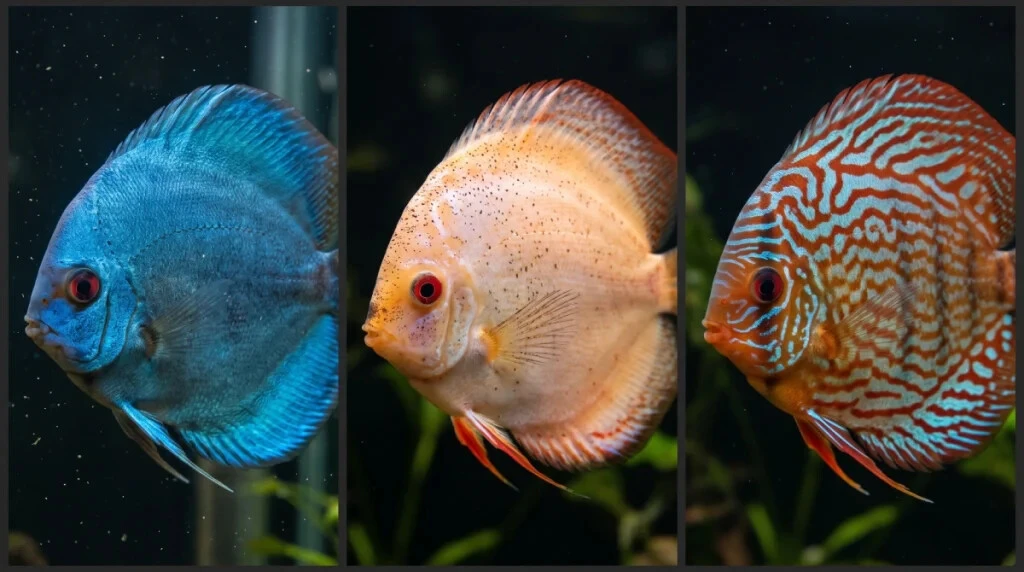
The discus you'll find in Australia are domestic colour varieties bred over decades, with names like Blue Diamond, Pigeon Blood and Red Turquoise. They're the same fish under the colour, and they share the same care.
Discus are social. They live in groups, sort themselves into a pecking order, and do best in a group of five or six. A single discus is usually a nervous, shy one.
Water Parameters: Warm, Soft and Steady
Discus like it warm. Our experts recommend 28–30°C, which is several degrees warmer than most tropical community fish. They prefer soft, slightly acidic water with a pH between 6.0 and 7.0.
Captive-bred discus usually adapt to treated tap water well, provided it's stable. Ask what water your fish were raised in, match it as closely as you can, and then leave it alone. A steady pH of 7.2 is far better for a discus than one that bounces between 6.5 and 7.5 every week.
Australian tap water contains chlorine or chloramine, so every drop that goes into the tank needs a water conditioner.
Space and the Starter Kit
Discus are tall fish as well as wide ones, so they need height. A group of five or six adults needs at least 250–300 litres, with a tank 45–50cm tall or more.
Buy your gear at least two weeks before your fish.
The Filter
Discus come from slow water and don't enjoy a strong current. A canister filter with a spray bar, or a pair of large sponge filters, keeps the water clean without pushing the fish around.
The Heater
This is the most important piece of kit in a discus tank. Holding 28–30°C through a Melbourne, Canberra or Hobart winter takes real power, so choose a good adjustable heater with a thermostat, around 1 watt per litre. In a big tank, two smaller heaters at either end spread the warmth evenly and give you a backup if one fails.
The Lid
A lid keeps heat in, cuts evaporation and stops a startled fish from jumping.
The Environment
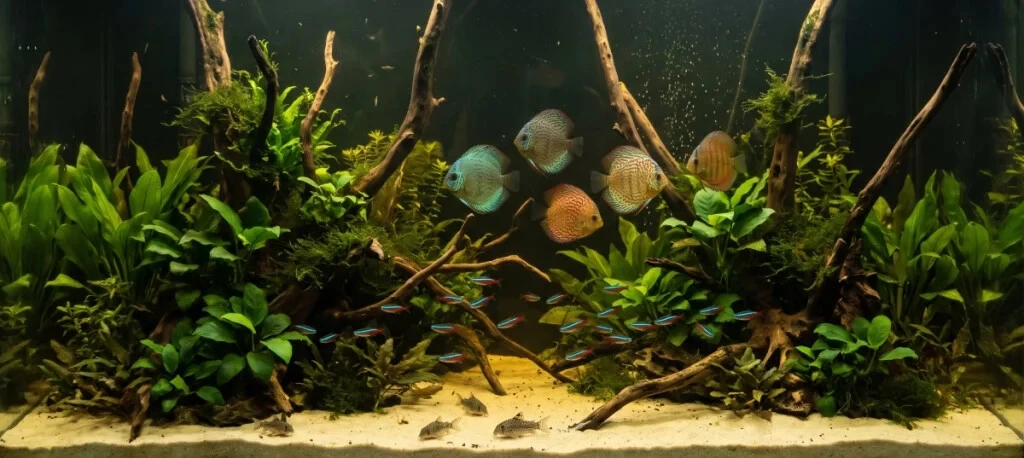
In the wild, discus shelter among fallen branches and tree roots in shaded water. A few tall pieces of driftwood, some broad-leaved plants that tolerate warm water, like Amazon Swords and Anubias, and a fine sand bottom recreate that well. Some keepers prefer bare-bottomed tanks for easy cleaning, but a newcomer's discus usually settles faster with cover around it.
Keep the lighting soft, and place the tank somewhere calm. A tank next to the front door or a slamming kitchen cupboard makes for permanently nervous discus.
An Invisible Science: the Nitrogen Cycle
Discus should only go into a mature, fully cycled tank. Fish produce toxic ammonia; bacteria turn it into nitrite, still toxic, and then into nitrate, which water changes remove.
The Pro Move: Add a pinch of fish food to the empty, running tank every day for two to three weeks until ammonia and nitrite read 0ppm. For discus, let it run for at least a month beyond that before they go in. Our guide on How to Cycle a Fish Tank the Right Way has the full method.
The First Week
Here's some honest advice: your new discus will probably hide and refuse food for the first few days. Almost every discus does. They've just been bagged, shipped and dropped into a new home, and it takes time for them to feel safe.
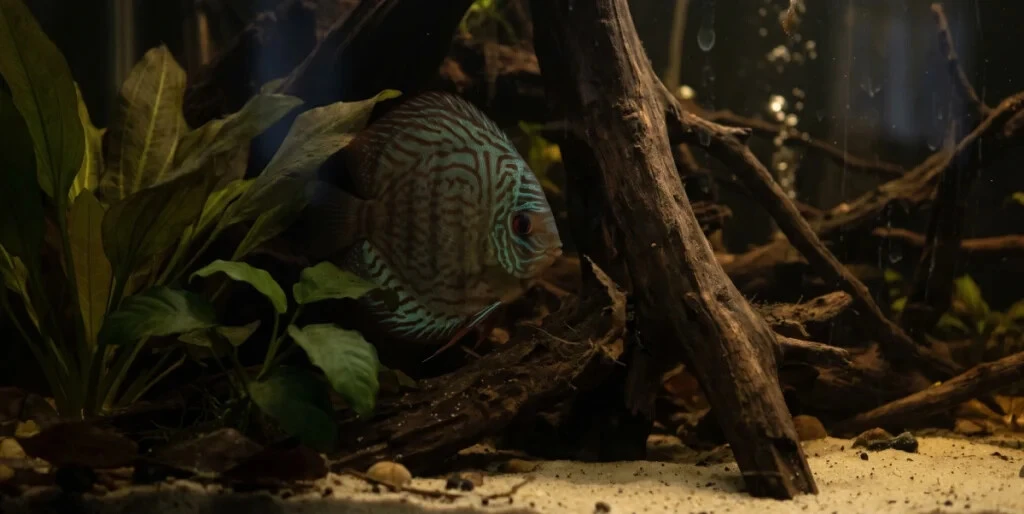
Keep the lights dim, keep people traffic low, and offer a small amount of food once or twice a day, removing anything uneaten after a few minutes. Most discus start eating within three to seven days. A fish that still refuses food after a week, or produces pale, stringy droppings, needs a closer look, so get in touch with our team or an aquatic vet.
The same patience applies whenever you add new discus to an established group. Expect some squabbling while the pecking order sorts itself out, and add new fish several at a time so no single newcomer takes all the attention.
Choosing Tank Mates
Few fish enjoy discus temperatures, which limits the list. Good companions are calm, warm-water fish that won't compete hard at feeding time:
- Cardinal and Rummy Nose tetras: small, peaceful and happy at the warm end of the range
- Sterbai corydoras: one of the few corys that handles 28°C or more
- Bristlenose catfish: keeps the glass and wood tidy
Avoid fast, boisterous fish like barbs, any fish that needs cooler water, and other large cichlids, including angelfish, which compete for space and food.
Feeding
Discus are protein lovers with small stomachs, so they do best on several small meals a day. Feed adults two or three times daily, and growing juveniles three to four times. A quality discus pellet or granule makes a reliable staple, rotated with frozen bloodworm, brine shrimp and beef heart mixes.
Remove leftovers within a few minutes. Rich discus foods foul the water quickly, and clean water matters more for discus than for almost any other fish.
The Weekly Rhythm
Weekly: Discus need more water changes than most fish. Change 30–50% each week, with new water matched to the tank's temperature and treated with conditioner. Many keepers do two smaller changes a week instead of one big one.
Monthly: Rinse filter media in old tank water, never under the tap.
Always: Watch their colour. Discus darken when they're stressed or unwell and brighten when they're settled. Dark colour is your cue to test the water.
Common Mistakes
- Buying a single discus. One fish on its own stays nervous. Start with five or six.
- Running the tank too cool. At 26°C discus lose their appetite and their defences. Keep it at 28–30°C.
- Chasing pH. Stable water beats perfect numbers every time.
- Rushing into a new tank. Discus need a fully cycled, mature tank, not a fortnight-old one.
- Skipping water changes. Rich food and warm water make waste build up fast.
Quick Reference: Discus at a Glance
| Feature | Requirement | Why |
|---|---|---|
| Tank size | 250–300 litres for 5–6, 45cm+ tall | Tall-bodied, social fish |
| Temperature | 28–30°C | Warmer than most tropicals |
| pH | 6.0–7.0, and stable | Soft-water Amazon fish |
| Group size | 5–6 | Spreads out the pecking order |
| Water changes | 30–50% weekly | Rich foods, sensitive fish |
| Diet | Discus pellets plus frozen foods, 2–3 times a day | Small stomachs, high protein |
Myths: Fact vs. Fiction
Myth: "Discus are only for experts." Reality: Captive-bred discus are well within reach of a patient keeper with a mature tank and a steady routine.
Myth: "You need RO water and perfect parameters." Reality: Most domestic discus do well in treated, stable tap water. Consistency matters far more than hitting an exact number.
Myth: "A discus that hides is sick." Reality: Hiding in the first week is normal. Give them time, quiet and dim light before you worry.
That group of discus gliding up to greet you at the glass isn't reserved for experts. It comes from a warm, steady tank, clean water and a little patience in the first week. Give them that, and the king of the aquarium will be holding court in your living room for the next ten years.