

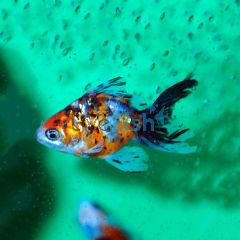
Bristol Shubunkin 7cm
Shubunkin goldfish are often among the first fish aquarists keep when entering the hobby. Goldfish make fantastic ornamental fish and carry a rich history. While the traditional orange goldfish is easily recognised, the mottled Shubunkin is just as common and well-loved. They are recognised by their elongated body shape, long tail, and stunning colouration.
-
-
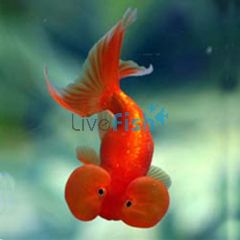 Red Bubble Eye 5cm$21.61
 -
-
-


Bristol Shubunkin
Shubunkin goldfish are often among the first fish aquarists keep when entering the hobby. Goldfish make fantastic ornamental fish and carry a rich history. While the traditional orange goldfish is easily recognised, the mottled Shubunkin is just as common and well-loved. They are recognised by their elongated body shape, long tail, and stunning colouration.
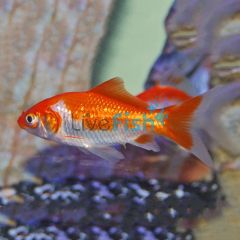
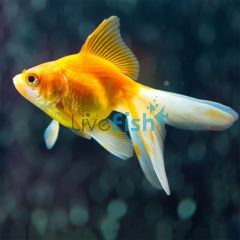
Bristol Shubunkins are a specific variety of Shubunkin goldfish, renowned for their beautifully heart-shaped, broad caudal fin, which differs from the more commonly seen comet-like tail of standard Shubunkins. These fish are easily identified by their diverse dalmatian-style patterning and wide range of colours, including black, white, red, orange, and blue. It often appears as though these colours have been randomly placed on the fish, and this randomness is unique to each individual. It is important to note that Bristol Shubunkins are simply a colour variation of the comet goldfish, which was developed in America. Their care requirements are identical to other comet strains, meaning they can be kept in mixed aquariums or ponds with different comet varieties.
Breeding Bristol Shubunkin goldfish is uncommon in the home aquarium, but in outdoor ponds with adequate plant cover, spawning may occur naturally. Females are egg scatterers, and as long as there is sufficient vegetation, there is a good chance that some offspring will survive. While there are no obvious distinguishing features between males and females, females tend to have a rounder body shape.
Tank Recommendations for your Bristol Shubunkin
As Bristol Shubunkins are a colour variation of the standard comet goldfish, which can easily exceed 20 cm in length, they are best kept in large aquariums. A minimum volume of around 350 litres is recommended for a fully grown fish. This provides ample swimming space and a sufficient water volume for a species that is generally quite messy. A sandy substrate is ideal, as goldfish enjoy sifting through the sand in search of food. Fine-leaved plants may be eaten, but hardier species such as Anubias are suitable.
Suitable Tank Buddies
Bristol Shubunkins are extremely peaceful and can be kept with a variety of tank mates. Suitable companions include active, cold-water-tolerant species. While goldfish may eat fry produced by smaller fish, they generally coexist well with adult fish. Fin-nipping species should be avoided entirely, as they can quickly damage the goldfish’s flowing fins.
Usually Compatible
Other goldfish strains, danios, koi, and similar cold-water species.
Sometimes Compatible
Very small or slow-moving fish that may potentially be eaten, such as white cloud mountain minnows.
Rarely Compatible
Discus, neon tetras, rams, Oscars, and other high-end tropical or aggressive species.
Feeding your Bristol Shubunkin
Bristol Shubunkins are very entertaining to feed, often creating a feeding frenzy when kept in groups. A high-quality pellet food is the easiest and most nutritious staple diet. Their diet can also be supplemented with green matter, such as blanched vegetables, to provide added variety and nutrition.
| Scientific Name | Carassius auratus |
|---|---|
| Care Level | Easy |
| Common Names | Shubunkin Comet, Calico Comet |
| Diet | Omnivore |
| Fish Family | Cyprinidae |
| Lifespan (years) | 15 |
| Max. Length (cm) | 20 |
| Min. Tank Volume (l) | 350 |
| Origin | Asia |
| Sociability | Peaceful |
| Venomous | No |
| Water Conditions | 5-26° C, pH 6.0-7.5 |
| Plant Safe | No |