Best Aquarium Fish for Beginners: A Practical, No-Stress Guide

In This Guide
- 1. The 5 Best Beginner Fish
- 2. 1) Platy (Xiphophorus maculatus)
- 3. 2) Zebra Danio (Danio rerio)
- 4. 3. Fancy Guppies (Poecilia reticulata)
- 5. 4) Corydoras Catfish (Corydoras spp.)
- 6. 5) Betta Splendens (Siamese Fighting Fish)
- 7. Common Myths New Fishkeepers Hear
- 8. Myth 1: “Fish grow to the size of the tank”
- 9. Myth 2: “Bowls are fine, Bettas love cups”
- 10. Myth 3: “You can add fish on day one”
- 11. Myth 4: “Plecos clean your tank, so you won’t need maintenance”
- 12. Myth 5: “Goldfish are great for small bowls”
- 13. Myth 6: “Heaters aren’t necessary indoors”
- 14. Myth 7: “Algae eaters solve algae problems”
- 15. Fish Beginners Should Avoid
- 16. Your New Tank Checklist
- 17. Phase 1: The Shopping List
- 18. Phase 2: Setting the Stage
- 19. Phase 3: The Nitrogen Cycle
- 20. Phase 4: Introducing Your Fish
- 21. Simple Starter Stocking Plans
- 22. The Cheat Sheet: Maintenance
- 23. Beginner Fish: Quick Reference Summary
- 24. Why These Five Work So Well for Beginners
- 25. Pro Tips for a Smooth Start
- 26. Frequently Asked Questions
Starting your first aquarium is exciting, but it can also feel overwhelming. The good news? With the right fish and a simple plan, you can build a thriving tank that’s beautiful, low maintenance, and beginner-friendly.
This guide covers:
- Five excellent beginner fish and why they’re great
- Which fish suit small tanks (20–40 L)
- Common beginner myths
- Fish to avoid at the start
- A step-by-step new tank checklist
- A quick reference summary, minimum tank size and temperament for each of the five fish
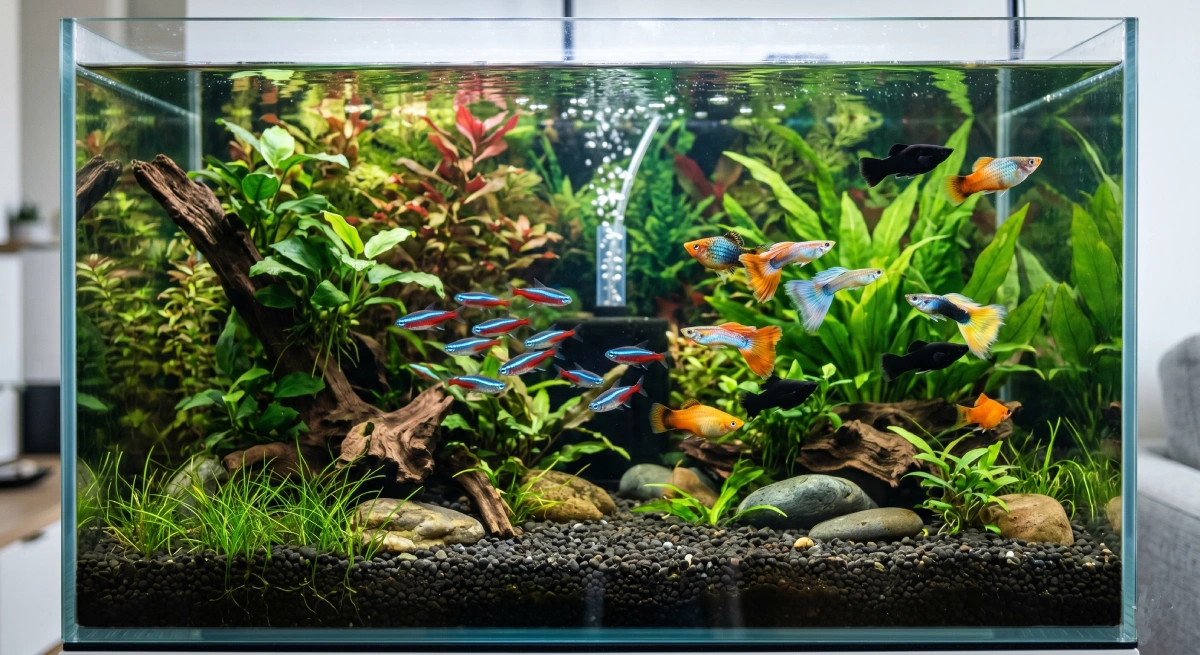
The 5 Best Beginner Fish
Below are five hardy, forgiving species that handle small mistakes, have manageable care needs, and look fantastic.
1) Platy (Xiphophorus maculatus)
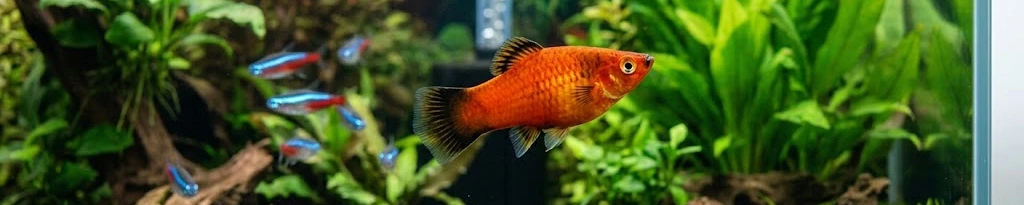
Why they’re great: Colorful, active, peaceful, and very forgiving of minor water fluctuations. They eat almost anything (flakes, pellets, blanched veg) and do well in community setups.
Highlights:
- Hardy & adaptable: Handle a wide range of water conditions.
- Livebearers: They can reproduce quickly, fun if you want fry, but plan ahead.
- Group-friendly: Keep in small groups (e.g., 1 male to 2–3 females).
Ideal for: New hobbyists who want vibrant color and movement in a small to mid-size tank.
2) Zebra Danio (Danio rerio)
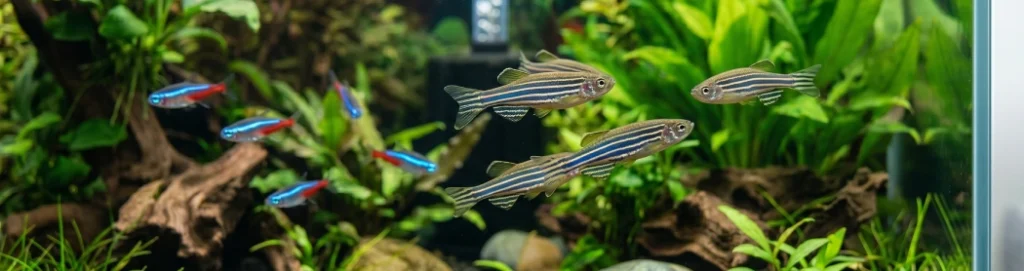
Why they’re great: Extremely hardy, energetic, and tolerant of beginner mistakes. They’re constant swimmers and highly social.
Highlights:
- Schooling fish: Keep in groups of 6+ to reduce stress and nipping.
- Active swimmers: Prefer a longer tank footprint (they cruise back and forth).
- Cool to temperate: Do fine at room temperature in many homes, though consistent 22–24 °C often shows the best behavior.
Ideal for: A lively display with constant movement and low fuss, just give them horizontal swimming space.
3. Fancy Guppies (Poecilia reticulata)
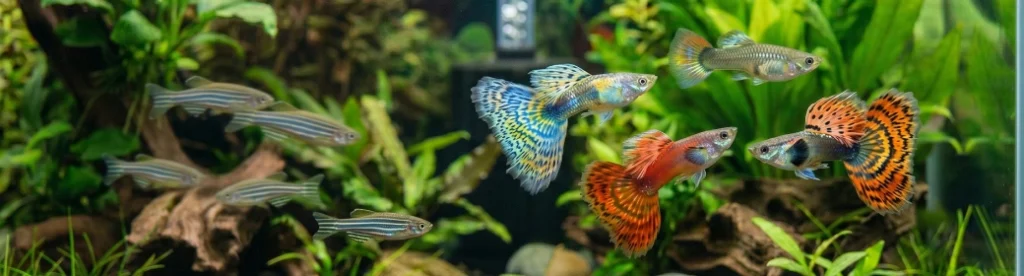
If the aquarium hobby had a mascot, it would probably be the Guppy. These are the "jewels" of the freshwater world—they’re incredibly active, come in every color of the rainbow, and have massive, flowing tails that make them look much larger than they actually are.
- Why they work: They are exceptionally hardy and seem to have a permanent "curiosity" about their environment. They’ll usually be the first fish to swim to the glass when you walk into the room. Guppies bring constant movement to the top and middle layers of your tank. They are social, peaceful, and get along with almost any other non-aggressive species.
Highlights:
- Endless Variety: From "Cobra" patterns to solid neons and leopards, no two guppies look exactly alike.
- Active Swimmers: They are busy bees. They’ll spend all day exploring plants and decor, which makes the tank feel very "alive."
- Prolific Breeders: Like Platies, they are livebearers. If you want to keep your population stable, consider an all-male tank—male guppies are actually the ones with the most vibrant colors anyway.
Ideal for: Beginners who want maximum color and a "high-energy" tank without the high-maintenance requirements of more sensitive species.
4) Corydoras Catfish (Corydoras spp.)
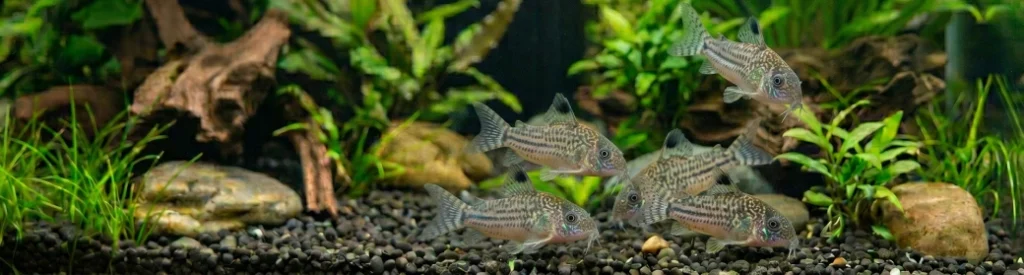
Why they’re great: Endearing bottom-dwellers that keep the substrate tidy.
Highlights:
- Social: Keep in groups of at least 6.
- Gentle: Calm, peaceful community fish.
- Substrate matters: Prefer smooth sand or rounded gravel to protect their barbels (whiskers).
Ideal for: Adding personality to the lower level of your tank and encouraging natural behaviors.
Beginner picks: Bronze Cory (C. aeneus), Panda Cory (C. panda). For smaller tanks, consider Pygmy Cory (C. pygmaeus), but keep numbers up.
5) Betta Splendens (Siamese Fighting Fish)
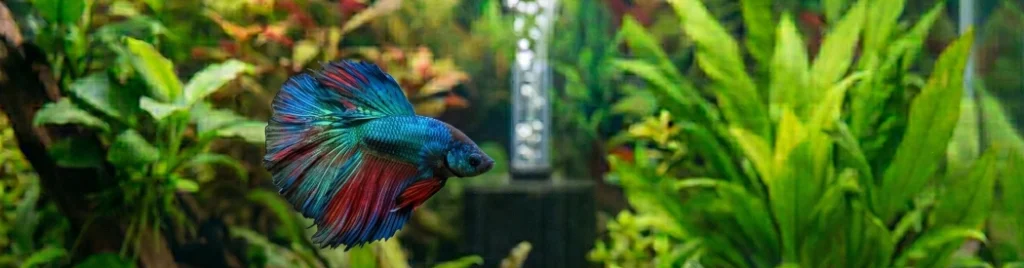
Why they’re great: Stunning colors, tons of character, and truly beginner-friendly if you meet a few key needs.
Highlights:
- Solo star: Keep one male alone (or in a careful community with non-nippy, calm tankmates - advanced).
- Heated & filtered: Despite myths, Bettas need a heater (about 25–27 °C) and a gentle filter.
- Low-flow: Their long fins do best in calm waters with slow output or baffled flow.
Ideal for: A compact, beautiful centerpiece fish with personality, perfect for a desktop or small tank done properly.
Which Fish Are Suitable for a Small Tank?
Let’s define “small” as 20–40 L.
The Best Choices:
- The Betta (1 male): The undisputed king of the 20-Litre setup. They are solitary, intelligent, and much prefer having a space all to themselves. Just ensure they have a heater and a gentle filter.
- Fancy Guppies (all male): A group of 4–6 males works brilliantly in a 40-Litre tank. Because they don’t grow large, they have plenty of room to zoom around. Crucial Tip: Stick to males only in a small tank; otherwise, you’ll have a population explosion that will quickly overwhelm your filter.
- Endler’s Livebearers: If your tank is closer to 30 Litres, these are the perfect Guppy alternative. They are smaller, hardier, and incredibly vibrant. A group of 6–8 males looks spectacular in a planted setup.
- Pygmy Corydoras: These tiny catfish stay under 3cm. A group of 8–10 can work in a 40-Litre tank, provided you have a soft sand substrate for them to play in.
Use Caution or Avoid:
- Zebra Danios: Even though they are small, these guys are "sprint swimmers." They really need a longer tank (at least 60–75 Litres) to burn off their energy.
- Standard Corydoras: Common species like the Bronze or Albino Cory grow a bit too chunky for a 20-Litre tank. Keep these for your 75-Litre setups.
- Shrimp and Snails: If your tank is under 20 Litres, we recommend moving away from fish entirely. A colony of Red Cherry Shrimp or a few ornate Nerite Snails are fascinating to watch and keep the tank sparkling clean.
Common Myths New Fishkeepers Hear
Myth 1: “Fish grow to the size of the tank”
- Reality: Fish stunting is a harmful response to poor conditions and cramped space. It leads to deformities and shortened lifespans. Always size your tank to the adult size and behavior.
Myth 2: “Bowls are fine, Bettas love cups”
- Reality: Bowls and unfiltered cups are a death trap. To stay healthy and show off their best colors, a Betta needs a minimum of 20 Litres, a heater, and a gentle filter. They originate from warm, slow-moving tropical waters - not stagnant, room-temperature cups.
Myth 3: “You can add fish on day one”
- Reality: New tanks must cycle - i.e., establish beneficial bacteria that convert toxic ammonia → nitrite → nitrate. This typically takes 2–6 weeks. Use a liquid test kit, add a source of ammonia (fish food or bottled bacteria), and confirm zero ammonia/nitrite before fully stocking.
Myth 4: “Plecos clean your tank, so you won’t need maintenance”
- Reality: Many plecos grow to 30–60 cm and produce significant waste. No fish replaces water changes, gravel vacuuming, and filter care. Choose species appropriate to your tank size.
Myth 5: “Goldfish are great for small bowls”
- Reality: Goldfish require large tanks (even fancy goldfish do best in 100+ L, commons need ponds). They’re messy and need robust filtration.
Myth 6: “Heaters aren’t necessary indoors”
- Reality: Tropical species need stable temperatures (often 24–26 °C). Temperature swings stress fish and cause disease.
Myth 7: “Algae eaters solve algae problems”
- Reality: Algae is primarily a nutrient/light imbalance issue. Good lighting schedules, plant competition, and reasonable feeding are the real solutions.
Fish Beginners Should Avoid
Some fish are wonderful, but not for your first tank. Avoid the following until you’re comfortable with water chemistry, stocking, and disease prevention:
- Common/Comet Goldfish: Need huge tanks or ponds and heavy filtration.
- Common Pleco (Hypostomus/Pterygoplichthys spp.): Often sold as “algae eaters” but grow massive; not for small to mid-size tanks.
- Bala Shark, Clown Loach: Schooling giants that need large tanks (often 300+ L) and long footprints.
- Chinese Algae Eater: Becomes aggressive and can latch onto tankmates.
- Tiger Barb: Fin-nippy and best in large groups to dilute aggression, can harass Bettas and slow fish.
- Oscars & other large cichlids: Require big tanks, strong filtration, careful diets, and experienced care.
- Neon Tetras: Popular but surprisingly delicate in brand-new setups; better after the tank is mature (8–12+ weeks).
- Mollies in very soft water: They prefer harder, mineral-rich water; soft water beginners often struggle with livebearers like mollies.
This version simplifies the technical jargon, removes all mention of gallons, and breaks the process down into a logical "First Month" flow.
Your New Tank Checklist
Setting up a tank is a marathon, not a sprint. If you take it step-by-step, you’ll avoid the "cloudy water" headaches that most beginners face.
Phase 1: The Shopping List
- The Tank: Aim for 60 to 75 Litres if you have the space. Larger volumes of water are actually easier to manage because mistakes (like overfeeding) are diluted.
- The Life Support: You need a filter and a heater.
- The Safety Net: A lid is non-negotiable - Guppies and Bettas are world-class jumpers.
- The Essentials: Water conditioner (dechlorinator) to make tap water safe, a bucket, a siphon for cleaning, and a liquid water test kit.
Phase 2: Setting the Stage
- Placement: Put your tank on a sturdy, level surface away from direct sunlight (to prevent algae) and air conditioners.
- Substrate: Rinse your sand or gravel thoroughly before putting it in. Use sand if you plan on keeping Corydoras.
- The Fill: Fill with water, add your dechlorinator, and turn on the filter and heater. Let it reach a stable temperature (usually 25°C for tropical fish).
Phase 3: The Nitrogen Cycle
You can’t add fish the same day you buy the tank. You need to grow "good bacteria" in your filter first.
- Start the cycle: Add a pinch of fish food or a bottle of "Quick Start" bacteria to the water.
- The Test: Use your test kit. You are waiting for Ammonia and Nitrite to hit 0. This usually takes 2-4 weeks. Once they are at zero, do a 30% water change - now you're ready for fish!
Phase 4: Introducing Your Fish
- Stock Slowly: Don't buy all your fish at once. Start with your hardiest group (like 5 Guppies).
- The Acclimation: Float the bag in your tank for 15 minutes to match the temperature. Then, slowly add a little tank water into the bag over another 15 minutes before netting the fish into their new home.
Simple Starter Stocking Plans
For a 40-Litre Tank:
- The Solo Star: 1 Male Betta + 2 Nerite Snails.
- The Color Pop: 6 Male Fancy Guppies + a few Red Cherry Shrimp.
- The Nano School: 8 Endler’s Livebearers + 1 Mystery Snail.
For a 75-Litre Tank:
- The Community: 6 Platies + 8 Panda Corydoras (bottom dwellers) + 1 Bristlenose Catfish.
- The High Energy: 8 Zebra Danios + 8 Pygmy Corydoras + 6 Cherry Barbs.
- The Peaceful Mix: 1 Honey Gourami + 10 Neon Tetras + 6 Corydoras.
The Cheat Sheet: Maintenance
- Daily: Check that the heater is working and the fish look active. Feed only what they can eat in 60 seconds.
- Weekly: Replace 25% of the water with fresh, dechlorinated water. Use your siphon to suck "gunk" out of the gravel.
- Monthly: Gently rinse your filter sponges in a bucket of old tank water (never tap water, as the chlorine kills your good bacteria!).
Beginner Fish: Quick Reference Summary
Use this as a cheat sheet when planning your first setup. These minimums assume you have a working filter, a consistent maintenance routine, and are keeping the fish in their required group sizes.
|
Common Name |
Scientific Name |
Min. Group Size |
Min. Tank Size |
Temp. Range |
Temperament |
Notes |
|
Platy |
Xiphophorus maculatus |
3+ |
40 L (60 L better) |
22–26°C |
Peaceful |
Livebearer; stick to all males to avoid a population explosion. |
|
Zebra Danio |
Danio rerio |
6+ |
75 L |
20–24°C |
Very Active |
Needs a longer tank for "sprinting." Keep in a group to prevent nipping. |
|
Honey Gourami |
Trichogaster chuna |
1–2 |
60 L |
24–28°C |
Peaceful |
"Labyrinth" fish that can breathe air at the surface. Very gentle. |
|
Fancy Guppy |
Poecilia reticulata |
5+ |
40 L |
22–28°C |
Active |
High energy and colorful. Best kept as all-males in smaller setups. |
|
Corydoras |
Corydoras spp. |
6+ |
75 L (Pygmy: 40 L) |
22–26°C |
Peaceful |
Bottom-dwellers. Must have smooth sand to protect their whiskers. |
|
Betta (Male) |
Betta splendens |
Solo |
20 L |
25–27°C |
Semi-Aggressive |
Needs a heater and a lid (they jump!). Best kept alone as a centerpiece. |
Why These Five Work So Well for Beginners
- Hardiness: They tolerate minor beginner mistakes in feeding and water parameters.
- Compatibility: Most are peaceful community fish (Bettas are the exception).
- Manageable size: All fit well in small to mid-size tanks, making equipment affordable and maintenance realistic.
- Behavioral interest: Schooling, foraging, displays - these species are fun to watch and learn from.
Pro Tips for a Smooth Start
- Stability beats perfection: Consistent temperature, regular water changes, and measured feeding prevent most problems.
- Buy a liquid test kit: Strips are quick but less precise. Liquids give you confidence in ammonia/nitrite/nitrate control.
- Source healthy fish: Choose alert fish with clear eyes, full fins, and good appetite. Avoid tanks with dead fish or cloudy water at the store.
- Acclimate gently: Float the bag to equalise temperature, then gradually add tank water over 15–30 minutes before netting fish into the tank.
- Feed variety: Rotate flakes/pellets with frozen daphnia, brine shrimp, or bloodworms (sparingly).
- Plants help: Even hardy plants (Java fern, Anubias, floating Salvinia) stabilise the system and enrich behavior.
Frequently Asked Questions
What is the best fish for a beginner aquarium?
Hardy species like Neon Tetras, Fancy Guppies, and Honey Gouramis are the gold standard. They are peaceful, colourful, and much more "forgiving" of minor beginner mistakes in water quality.
Are Gouramis good for beginner aquariums?
Yes, especially Honey or Dwarf Gouramis. They are "Labyrinth" breathers, meaning they can gulp air from the surface if they need to. They are peaceful, graceful, and have unique "feelers" they use to touch their surroundings.
Which fish are suitable for a small (Nano) tank?
If you have a 20–40 litre tank, stick to a single male Betta, a small group of Endler’s Livebearers, or "micro-fish" like Chili Rasboras. If the tank is under 20 litres, we recommend skipping fish entirely and trying colourful Red Cherry Shrimp or Nerite Snails instead.
What other fish should beginners avoid?
Stay away from "Cute Monsters" like baby Oscars or Common Plecos; they grow massive (30–50cm) and will quickly outgrow a standard home tank. Also, avoid "Divas" like Discus, which require expert-level water chemistry and daily maintenance.