


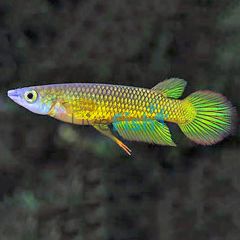
Aphyosemion Walkeri 3.5cm
-
-
-
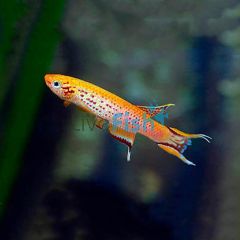 Australe Gold Lyretail 3cm$35.70
-
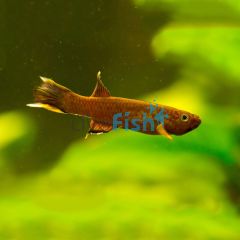 Australe Chocolate 3cm$29.00
-
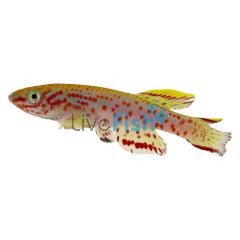 Aphyosemion Gardneri 3.5cm$16.94


Aphyosemion Walkeri
There aren't many freshwater fish that display the combination of colour and intricate finnage found amongst African Killifish. The genus Aphyosemion contains some of the most spectacular examples, with many species developing elaborate patterns and contrasting colours that are rarely seen outside this group. Aphyosemion walkeri is a beautiful West African species that combines brilliant natural colouration with the relatively secretive behaviour typical of forest-dwelling Killifish, making it an excellent choice for aquarists looking to maintain something a little different.
Male Aphyosemion walkeri develop an elongated body with a mixture of metallic blue-green, yellow and warmer reddish pigmentation. Numerous red spots and irregular markings can extend across the flanks, creating a strong contrast against the lighter metallic scales. The dorsal, anal and caudal fins are particularly impressive, often displaying combinations of yellow, orange, red and darker edging that become increasingly pronounced as the fish matures. Depending on the population and individual, the exact distribution of these colours can vary considerably. Females are generally more subdued, displaying a brown to olive body with smaller darker markings and considerably shorter fins. In a shaded planted aquarium, the males can appear relatively subtle until they move beneath a beam of light, when the metallic highlights become much more noticeable.
Sexing Aphyosemion walkeri is relatively straightforward once mature, with males developing much stronger colouration and more elaborate finnage. Unlike South American annual Killifish, this species does not require its eggs to undergo a prolonged dry period. Adults deposit adhesive eggs amongst fine-leaved plants, mosses or spawning mops, where they develop under suitable aquatic conditions. A dedicated breeding aquarium with gentle filtration and regular collection of eggs can greatly improve the number of fry successfully raised.
Tank Recommendations for Your Aphyosemion Walkeri
A minimum aquarium size of around 40 litres is recommended for a pair or small group, with additional space beneficial when maintaining multiple males. These fish are best suited to a quiet, heavily planted aquarium with subdued lighting.
Driftwood, leaf litter, fine-leaved plants and floating vegetation provide an excellent environment whilst creating the shaded areas these fish appreciate. Gentle filtration and soft, slightly acidic water are ideal. A secure lid is essential because Killifish are excellent jumpers and can escape through small gaps around aquarium equipment.
Suitable Tank Buddies
Aphyosemion walkeri is generally peaceful but can be shy and is best maintained with similarly calm species.
Usually Compatible
Small peaceful rasboras, pencilfish, Otocinclus and other quiet community fish that are unlikely to compete aggressively for food.
Sometimes Compatible
Small tetras, dwarf Corydoras and peaceful dwarf cichlids may coexist successfully in larger planted aquariums, although territorial behaviour and feeding competition should be monitored.
Rarely Compatible
Tiger Barbs, large aggressive cichlids, predatory catfish and extremely active community fish should be avoided, as they may damage the Killifish's fins or continually stress them.
Feeding Your Aphyosemion Walkeri
Aphyosemion walkeri is carnivorous and naturally feeds on small aquatic and terrestrial invertebrates. Live and frozen foods such as daphnia, mosquito larvae, brine shrimp and bloodworms are particularly beneficial, especially when conditioning adults for breeding. Some individuals may accept quality micro pellets, although a varied diet containing plenty of small, protein-rich foods is recommended.
| Scientific Name | Aphyosemion Walkeri |
|---|---|
| Care Level | Moderate |
| Common Names | Walker's Killifish, Aphyosemion walkeri |
| Diet | Carnivore |
| Fish Family | Nothobranchiidae |
| Lifespan (years) | 4 |
| Max. Length (cm) | 6 |
| Min. Tank Volume (l) | 40 Litres |
| Origin | West Africa |
| Sociability | Peaceful |
| Venomous | No |
| Water Conditions | 21-25°C, pH 5.5-7.0 |
| Plant Safe | Yes |