


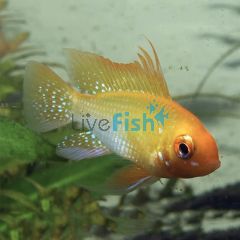
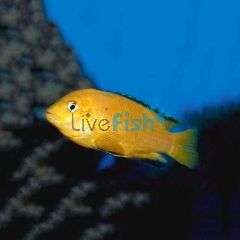
Tropheus Moorii - Papagei 3cm
Lake Tanganyika is home to some of the most geographically diverse cichlids in the world, and there probably isn't a better example of this than the Tropheus group. Different populations have become isolated along rocky sections of shoreline, resulting in an incredible number of naturally occurring colour variations within the same species.
-
-
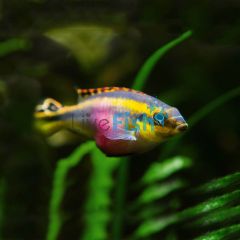
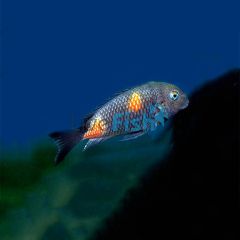 Tropheus Cherry Spot 3cm$49.64
-
-
-
-


Tropheus Moorii Papagei
Lake Tanganyika is home to some of the most geographically diverse cichlids in the world, and there probably isn't a better example of this than the Tropheus group. Different populations have become isolated along rocky sections of shoreline, resulting in an incredible number of naturally occurring colour variations within the same species. The Papagei is one of these highly sought-after Tropheus moorii variants, combining the unmistakable stocky body and constant grazing behaviour of Tropheus with a fantastic mixture of warm, contrasting colours. Tropheus moorii is endemic to Lake Tanganyika and occurs in numerous geographical colour forms.
The Papagei Tropheus develops a deep olive to charcoal body, which is broken up by areas of brilliant yellow, orange, and red colouration. Depending on the individual and its mood, these warmer colours can become considerably stronger across the shoulders, flanks, and fins, whilst darker pigmentation creates an amazing contrast across the body. Mature dominant fish generally display the strongest colours, particularly when establishing territories or displaying to other members of the colony. What makes a group of Tropheus particularly impressive, however, is their movement, as these fish spend almost the entire day travelling across rockwork and grazing the surfaces for algae and other aufwuchs. Pale limestone or lighter rockwork works incredibly well with the Papagei, as it provides a strong contrast against their darker base colour.
Sexing Tropheus can be quite difficult, as males and females are relatively similar in appearance. Mature males generally become slightly larger and more territorial; however, behaviour is often a better indicator than colour alone. Like other Tropheus, the Papagei is a maternal mouthbrooder. Following spawning, the female collects the fertilised eggs into her mouth, where they remain protected throughout their development before relatively large, fully formed fry are eventually released.
Tank Recommendations for Your Tropheus Moorii Papagei
Tropheus should not be maintained as just a pair or small group. They develop a strong social hierarchy and are generally most successful in a sizeable colony, where aggression can be distributed among numerous individuals. A large aquarium of around 300 litres or greater is recommended for a proper colony.
The aquarium should contain extensive rockwork with caves, ledges, and plenty of surfaces for natural algae growth, whilst still leaving open swimming areas. Strong filtration, high oxygen levels, and stable, hard, alkaline water are essential. Once a Tropheus colony establishes its hierarchy, avoid unnecessarily adding or removing individuals, as this can disrupt the group and trigger renewed aggression.
Suitable Tank Buddies
Tropheus Papagei are territorial and relatively aggressive, making tank mate selection considerably more important than with standard community fish.
Usually Compatible
Other appropriately selected Lake Tanganyika cichlids, such as Julidochromis and Altolamprologus, along with robust Synodontis species, can work in sufficiently large aquariums with extensive rockwork.
Sometimes Compatible
Other Tropheus varieties may coexist in very large aquariums; however, aggression, colony structure, and the possibility of unwanted hybridisation should all be considered before mixing populations.
Rarely Compatible
Discus, angelfish, South American community fish, Malawi cichlids requiring substantially different feeding strategies, and slow-moving species should generally be avoided. Tropheus are specialised fish and are at their best in a dedicated Tanganyikan setup.
Feeding Your Tropheus Moorii Papagei
Feeding is one of the most important aspects of keeping Tropheus successfully. Their natural feeding behaviour revolves heavily around grazing algae and aufwuchs from rocky surfaces, so the ideal diet should consist primarily of quality spirulina and vegetable-based pellets or flakes. Foods should be offered in smaller portions, and excessively rich or protein-heavy diets should be avoided.
| Scientific Name | Tropheus moorii |
|---|---|
| Care Level | Easy |
| Common Names | Tropheus Papagei, Papagei Moorii |
| Diet | Herbivore |
| Fish Family | Cichlidae |
| Lifespan (years) | 10 |
| Max. Length (cm) | 14 |
| Min. Tank Volume (l) | 300 |
| Origin | Africa |
| Sociability | Peaceful |
| Venomous | No |
| Water Conditions | 24-28° C, pH 8.0 - 9.0 |
| Plant Safe | With Caution |