


Tropheus Duboisi 8cm
-
-
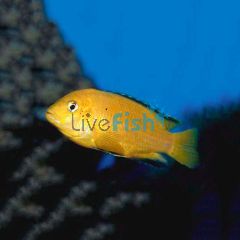
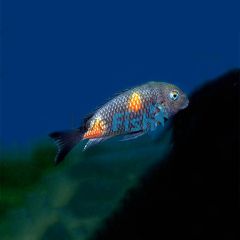 Tropheus Cherry Spot 3cm$49.64
 -
-
-
-


Tropheus Duboisi Maswa
If there were ever an African cichlid that completely transforms as it grows, it would have to be the Tropheus Duboisi. Juveniles and adults look so dramatically different that many people struggle to believe they're even the same species. The Maswa locality is one of the most desirable forms, combining crisp white spotting as juveniles with spectacular blue and yellow highlights as adults.
Juvenile Duboisi Maswa display an almost jet-black body covered in brilliant white spots from head to tail, creating one of the most recognisable patterns found in Lake Tanganyika. As they mature, these spots gradually disappear, replaced by a broad creamy-yellow band through the middle of the body, while subtle metallic blue develops across the face and fins. Adult males become particularly impressive, displaying deep velvety black coloration contrasted by electric blue facial markings and the famous yellow saddle. Watching this dramatic colour transformation is one of the biggest attractions of keeping this species.
Sexing juvenile Duboisi is extremely difficult, with males and females appearing almost identical until maturity. Like all Tropheus, they are maternal mouthbrooders, with females carrying fertilised eggs and fry inside their mouths for several weeks before releasing fully formed juveniles.
Tank Recommendations for your Tropheus Duboisi Maswa
Tropheus are highly social cichlids that should always be maintained in larger colonies to help spread aggression. A minimum aquarium size of 300 litres is recommended, with larger aquariums strongly preferred.
Rockwork should dominate the aquascape, creating numerous caves and territories while still leaving open swimming space. Strong filtration and excellent water quality are essential, as Tanganyikan cichlids appreciate highly oxygenated water and stable parameters.
Suitable Tank Buddies
Tropheus Duboisi are active and territorial but generally coexist well with other Tanganyikan cichlids.
Usually Compatible
Other Tropheus varieties, Cyprichromis, Synodontis petricola, Julidochromis, and similarly sized Lake Tanganyika cichlids with comparable water requirements.
Sometimes Compatible
Frontosa juveniles, larger shell dwellers, and peaceful rock-dwelling cichlids may work successfully in very large aquariums with carefully planned territories.
Rarely Compatible
South American cichlids, peaceful community fish, and aggressive Malawi mbuna are generally unsuitable due to differences in temperament, diet, and water chemistry.
Feeding your Tropheus Duboisi Maswa
Tropheus require a diet rich in vegetable matter and fibre to maintain a healthy digestive system. A quality spirulina pellet should form the basis of their diet, supplemented with algae wafers and vegetable-based foods. High-protein foods should only be offered occasionally, as excessive protein may contribute to digestive issues such as Malawi bloat.
| Scientific Name | Tropheus duboisi |
|---|---|
| Care Level | Moderate |
| Common Names | Maswa Duboisi, White Spotted Duboisi |
| Diet | Herbivore |
| Fish Family | Cichlidae |
| Lifespan (years) | 12 |
| Max. Length (cm) | 13 |
| Min. Tank Volume (l) | 300 |
| Origin | Lake Tangayika Africa |
| Sociability | Semi-aggressive |
| Venomous | No |
| Water Conditions | 24-27° C, pH 8.0 - 9.0 |
| Plant Safe | No |