


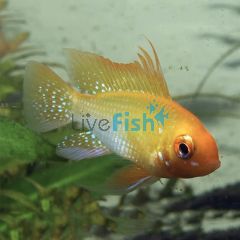
Bumble Bee Cichlid 4cm
-
-
 Tropheus Cherry Spot 3cm$49.64
-
-
-
-


Bumble Bee Cichlid
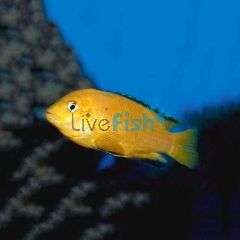
If there was ever a Malawi cichlid whose common name immediately made sense, it would have to be the Bumble Bee Cichlid. Pseudotropheus crabro develops a brilliant yellow body broken up by broad, dark vertical bars, creating a pattern remarkably similar to a bumble bee. What makes this species even more fascinating is its natural relationship with the large bagrid catfish Bagrus meridionalis. In Lake Malawi, Bumble Bee Cichlids are known to pick parasites from these enormous catfish, whilst also taking advantage of opportunities to feed on their eggs. That unusual natural behaviour gives this species a bit more history than simply being another colourful Mbuna.
Juvenile Bumble Bee Cichlids are generally brilliant yellow to golden, with several broad, charcoal-black vertical bands running down the body. The fins can also develop dark markings, creating an incredibly strong contrast that makes younger fish particularly attractive. Their colour can change dramatically with age, sex and social position. Mature dominant males may become so heavily pigmented that much of the yellow colour is replaced by deep brown to almost completely black colouration, particularly during territorial displays and breeding. Females and subordinate fish generally retain considerably more of the classic yellow-and-black Bumble Bee appearance.
Sexing Pseudotropheus crabro becomes easier as the fish mature. Males generally grow larger, become more territorial and develop considerably darker colouration, whilst females typically retain more yellow through the body. Like most Mbuna, Bumble Bee Cichlids are maternal mouthbrooders. Following spawning, the female collects the fertilised eggs into her mouth and carries them throughout their development before eventually releasing fully formed fry.
Tank Recommendations for Your Bumble Bee Cichlid
Bumble Bee Cichlids are relatively large and assertive Mbuna, so a minimum aquarium size of around 250 litres is recommended, particularly when maintaining them alongside other Malawi cichlids.
Extensive rockwork should be used to create caves, territories and broken lines of sight throughout the aquarium. A sand substrate works particularly well, and the water should remain consistently hard and alkaline. Overstocking is sometimes used in Malawi aquariums to distribute aggression, but this should only be attempted alongside excellent filtration and an appropriately sized aquarium.
Suitable Tank Buddies
Bumble Bee Cichlids are aggressive Mbuna and should be combined with fish capable of comfortably handling their territorial behaviour.
Usually Compatible
Other robust Mbuna, such as Red Zebras, Cobalt Blue Zebras and similarly assertive Lake Malawi cichlids in appropriately sized aquariums.
Sometimes Compatible
Peacocks and larger Haps can sometimes coexist with Bumble Bee Cichlids, although aggressive Mbuna may continually harass less territorial species and dominate feeding areas.
Rarely Compatible
Discus, angelfish, Bettas, Corydoras and standard peaceful community fish should be avoided. Aside from aggression, these species generally require very different water conditions from those of Lake Malawi cichlids.
Feeding Your Bumble Bee Cichlid
Bumble Bee Cichlids are naturally opportunistic omnivores and should receive a varied but controlled diet. A quality spirulina-based Malawi pellet or flake makes an excellent staple and can be supplemented with suitable vegetable matter and occasional small crustacean-based foods. Excessively rich diets and heavy feeding should be avoided.
| Scientific Name | Pseudotropheus Crabro |
|---|---|
| Care Level | Moderate |
| Common Names | Bumble Bee Cichlid, Hornet Cichlid, Crabro Cichlid |
| Diet | Omnivore |
| Fish Family | Cichlidae |
| Lifespan (years) | 10 |
| Max. Length (cm) | 15 |
| Min. Tank Volume (l) | 200 |
| Origin | Africa |
| Sociability | Semi-aggressive |
| Venomous | No |
| Water Conditions | 24-27° C, pH 7.5-9.0 |
| Plant Safe | Yes |