


Peacock Red Sided 5cm
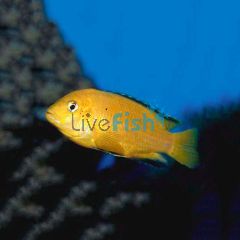
A colorful and eye-catching African cichlid known for its vibrant red hues and graceful movements. Peaceful for a cichlid and full of personality, it makes a stunning centerpiece in Malawi or community setups.
-
-
 Tropheus Cherry Spot 3cm$49.64
 -
-
-
-


Peacock Red Sided
African peacock cichlids have a cult following of their own. With so many colour variations, a mixed peacock aquarium is a true spectacle to see with all the activity and colour. These fish are often the best alternative to a saltwater aquarium because of how vibrant these cichlids are, and many of the popular colour strains have been developed in captivity through line breeding. For the Malawi peacock purists or for African cichlid keepers searching for a more natural fish, the red-sided peacock would be a great consideration.
The red-sided peacock gets its name from the striking red lateral bands that contrast against its deep metallic blue body. Males exhibit a shimmering, electric blue from head to tail with vibrant red-orange streaks along the midsection and sometimes into the dorsal fin, creating an intense glow under aquarium lights. These fish reach up to 15-17 cm and display classic peacock cichlid behaviour: peaceful in general, but territorial when it comes to breeding or establishing hierarchy. Their bold colours and graceful movement make them the centrepiece of any African cichlid setup.
Trying to find the males and females in red-sided peacocks is fairly easy. The easiest method is to look at the egg spots on the anal fin of the fish. Males will have lots, whereas females will have little to none. Another common method is to look at the tips of the dorsal and ventral fin. In males, these tend to be more pointed, whereas in females they are rounded. The wild habitat of African peacock cichlids is Lake Malawi.
Tank Recommendations for your Peacock Red Sided
The red-sided peacock is a very active fish that needs a tank that is at least 470 litres and around 4 feet minimum length. The main consideration for these fish is actually the aquarium environment itself. Since red-sided peacock cichlids can be aggressive to one another, it is best to have a lot of visual breaks in the tank.
These fish also need a higher PH of around 8.0, which can be maintained through the use of crushed coral or aragonite sand and conditioning salts. To also make the colours pop on the red-sided peacocks, keeping them on a black background would also be great.
Suitable Tank Buddies
The red-sided peacock is fairly peaceful and can be kept with other colour variations of the peacock species. Overstocking peacocks in aquariums is common to avoid aggression or territorial behaviour; however, this can lead to more water changes and maintenance. This can be avoided by keeping minimal fish in a large aquarium with lots of visual breaks. Consideration can be made to keep them with peaceful Mbunas and Haps.
Usually Compatible
Other African peacocks like dragon bloods or neon blues, and other common species such as electric yellow labs.
Sometimes Compatible
Larger haps such as venustus, Fuscodichromis, and small Africans such as julidochromis.
Rarely Compatible
Shrimp and nano aquarium fish like neon tetras, ember tetras, and also very aggressive South American cichlids such as Oscars and Jaguar Cichlids.
Feeding your Peacock Red Sided
Red-sided peacocks, like other peacock cichlids, are very easy to feed. It is an opportunistic feeder and will readily eat a wide range of foods, being both dry, fresh, and frozen. Their diet should contain good-quality African cichlid pellets with high contents of spirulina or greens. Feeding these fish once a day will be perfectly fine.
| Scientific Name | Aulonocara sp. |
|---|---|
| Care Level | Moderate |
| Common Names | Red Sided Peacock |
| Diet | Omnivore |
| Fish Family | Cichlidae |
| Lifespan (years) | 10 |
| Max. Length (cm) | 17 |
| Min. Tank Volume (l) | 470 |
| Origin | Africa |
| Sociability | Semi-aggressive |
| Venomous | No |
| Water Conditions | 24-26° C, pH 8.0-8.5 |
| Plant Safe | Yes |