


Gold Dust Freshwater Molly 3.5cm
Mollies have been kept in freshwater aquariums for generations, with selective breeding producing almost every combination of colour and pattern imaginable. The Gold Dust Molly is one of the most attractive examples of this, combining brilliant gold colouration with contrasting black pigmentation that can extend across the rear half of the body. Its active personality, easy feeding response and livebearing nature make it a popular option for aquarists wanting a colourful fish that is also relatively straightforward to breed.
-

-

-

-

-
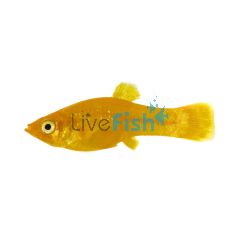 Mini Golden Molly 3.5cm$8.14


Gold Dust Freshwater Molly
Mollies have been kept in freshwater aquariums for generations, with selective breeding producing almost every combination of colour and pattern imaginable. The Gold Dust Molly is one of the most attractive examples of this, combining brilliant gold colouration with contrasting black pigmentation that can extend across the rear half of the body. Its active personality, easy feeding response and livebearing nature make it a popular option for aquarists wanting a colourful fish that is also relatively straightforward to breed.
The Gold Dust Molly develops a warm golden to yellow body that can appear almost metallic beneath aquarium lighting. Dark charcoal to black pigmentation is generally strongest across the rear section and fins, creating a dramatic contrast against the brighter front half. The exact balance of gold and black can vary between individuals, with some fish displaying scattered dark patches whilst others develop a more obvious division between the two colours. Their slightly elongated body and constant movement give the fish a lively appearance, particularly when a group is maintained against a planted green background. Mature fish in good body condition can display particularly strong golden highlights as they turn under the aquarium light.
Sexing Gold Dust Mollies becomes relatively straightforward once they mature. Males possess a modified anal fin called a gonopodium, whilst females have a normal fan-shaped anal fin and generally develop a broader abdomen. Mollies are livebearers, and females can produce broods of fully formed fry approximately every four to six weeks. A group containing more females than males helps reduce persistent chasing, whilst dense planting provides useful shelter for newborn fish. Different Molly strains can interbreed, so line breeding requires careful selection of adults.
Tank Recommendations for Your Gold Dust Freshwater Molly
A minimum aquarium size of around 75 litres is recommended for a small group of Gold Dust Mollies. These are active fish that benefit from plenty of swimming space, good filtration and dense planting around the edges of the aquarium. Mollies generally prefer moderately hard to hard, alkaline water and should not be maintained in very soft, acidic conditions. Stable mineral content and good water quality are important for keeping the fish in excellent condition.
Suitable Tank Buddies
Gold Dust Mollies are generally peaceful community fish and work particularly well with other species that appreciate mineral-rich water.
Usually Compatible
Platies, Swordtails, Guppies, peaceful rainbowfish, Corydoras that tolerate similar water conditions and Bristlenose Catfish.
Sometimes Compatible
Dwarf gouramis, larger tetras and other Molly varieties can work in spacious aquariums, although fin nipping and persistent male chasing should be monitored.
Rarely Compatible
Aggressive cichlids, large predatory fish and species requiring very soft, acidic water should generally be avoided.
Feeding Your Gold Dust Freshwater Molly
Gold Dust Mollies are enthusiastic omnivores that benefit from a diet containing plenty of vegetable matter. Quality spirulina flakes or vegetable-based pellets make excellent staples and can be supplemented with frozen daphnia, brine shrimp and bloodworms. A varied diet helps maintain strong growth, healthy digestion and the contrasting golden colouration of the strain.
| Scientific Name | Poecilia sphenops |
|---|---|
| Care Level | Easy |
| Common Names | Gold Dust Molly, Gold Dust Freshwater Molly |
| Diet | Omnivore |
| Fish Family | Poeciliidae |
| Lifespan (years) | 3 |
| Max. Length (cm) | 8 |
| Min. Tank Volume (l) | 75 |
| Origin | Central America, captive bred |
| Sociability | Peaceful |
| Venomous | No |
| Water Conditions | 24 to 28°C, pH 7.0 to 8.5 |
| Plant Safe | Yes |