


Callochromis Melanostigma 6cm
Lake Malawi has produced some of the most colourful freshwater fish found anywhere in the world, with the Mbuna cichlids becoming favourites amongst aquarists thanks to their vibrant colours, fascinating behaviour and constant activity. One fascinating thing about the Mbuna group is that each species has evolved to occupy a slightly different niche amongst the rocky shorelines of Lake Malawi.
-
-
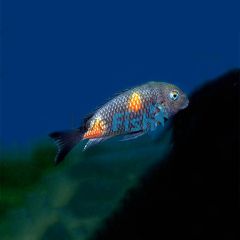 Tropheus Cherry Spot 3cm$49.64
 -
-
-
-


Melanochromis Melanostigma
Lake Malawi has produced some of the most colourful freshwater fish found anywhere in the world, with the Mbuna cichlids becoming favourites amongst aquarists thanks to their vibrant colours, fascinating behaviour and constant activity. One fascinating thing about the Mbuna group is that each species has evolved to occupy a slightly different niche amongst the rocky shorelines of Lake Malawi. Melanochromis melanostigma is one of the more uncommon members of the genus and is highly regarded by African cichlid enthusiasts looking for something a little different from the more commonly available species.
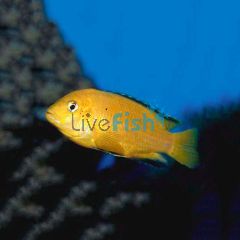
Melanochromis melanostigma develops a striking combination of metallic blues, charcoal blacks and lighter electric blue highlights that become increasingly intense as the fish matures. Mature males display the strongest colouration, often developing a rich midnight-blue body contrasted by lighter horizontal bands that run the length of the fish. Females remain noticeably lighter, usually displaying softer gold to tan colouration with darker striping. The contrast between the sexes makes breeding groups particularly impressive, whilst pale rockwork really allows the males' colours to stand out.
Sexing Melanochromis melanostigma is relatively straightforward once mature, with males becoming larger, considerably darker and much more territorial than females. Like all Mbuna, they are maternal mouthbrooders, with the female collecting the fertilised eggs into her mouth, where they remain protected for approximately three weeks before fully developed fry are released. Maintaining a ratio of one male to several females will generally produce the best long-term results.
Tank Recommendations for your Melanochromis Melanostigma
Melanochromis melanostigma grows to approximately 12 cm and should be maintained in an aquarium of at least 250 litres. A rocky aquarium with numerous caves and broken lines of sight is essential to reduce aggression and establish individual territories. Sand is the preferred substrate, whilst strong filtration and high oxygen levels help replicate the highly oxygenated waters of Lake Malawi. Stable alkaline water conditions are equally important for long-term health.
Suitable Tank Buddies
Melanochromis melanostigma are semi-aggressive Mbuna and are best maintained with other African cichlids of similar size and temperament.
Usually Compatible
Yellow Labs, Acei, Rusty Cichlids, Cynotilapia, Labeotropheus, Synodontis catfish and other moderately aggressive Mbuna.
Sometimes Compatible
Peacock cichlids, Haplochromines and larger African catfish may coexist successfully in spacious aquariums with careful stocking and plenty of rockwork.
Rarely Compatible
South American cichlids, goldfish, peaceful community fish and slow-moving species should generally be avoided due to their vastly different water requirements and inability to cope with Mbuna aggression.
Feeding your Melanochromis Melanostigma
Melanochromis melanostigma are primarily herbivorous grazers that naturally feed on algae and microorganisms growing across rocky surfaces. The ideal diet would consist of a quality spirulina-based pellet supplemented with algae wafers, blanched spinach, and zucchini. Frozen foods can occasionally be offered; however, excessive protein should be avoided to minimise the risk of digestive issues such as Malawi Bloat.
| Scientific Name | Callochromis melanostigma |
|---|---|
| Care Level | Easy |
| Common Names | Melanostigma Mbuna, Melanochromis melanostigma |
| Diet | Herbivore |
| Fish Family | Cichlidae |
| Lifespan (years) | 10 |
| Max. Length (cm) | 12 |
| Min. Tank Volume (l) | 250 |
| Origin | Lake Malawi |
| Sociability | Semi-aggressive |
| Venomous | No |
| Water Conditions | 24-27° C, pH 7.8-8.5 |
| Plant Safe | No |